How to become a female travel guide in Canada?

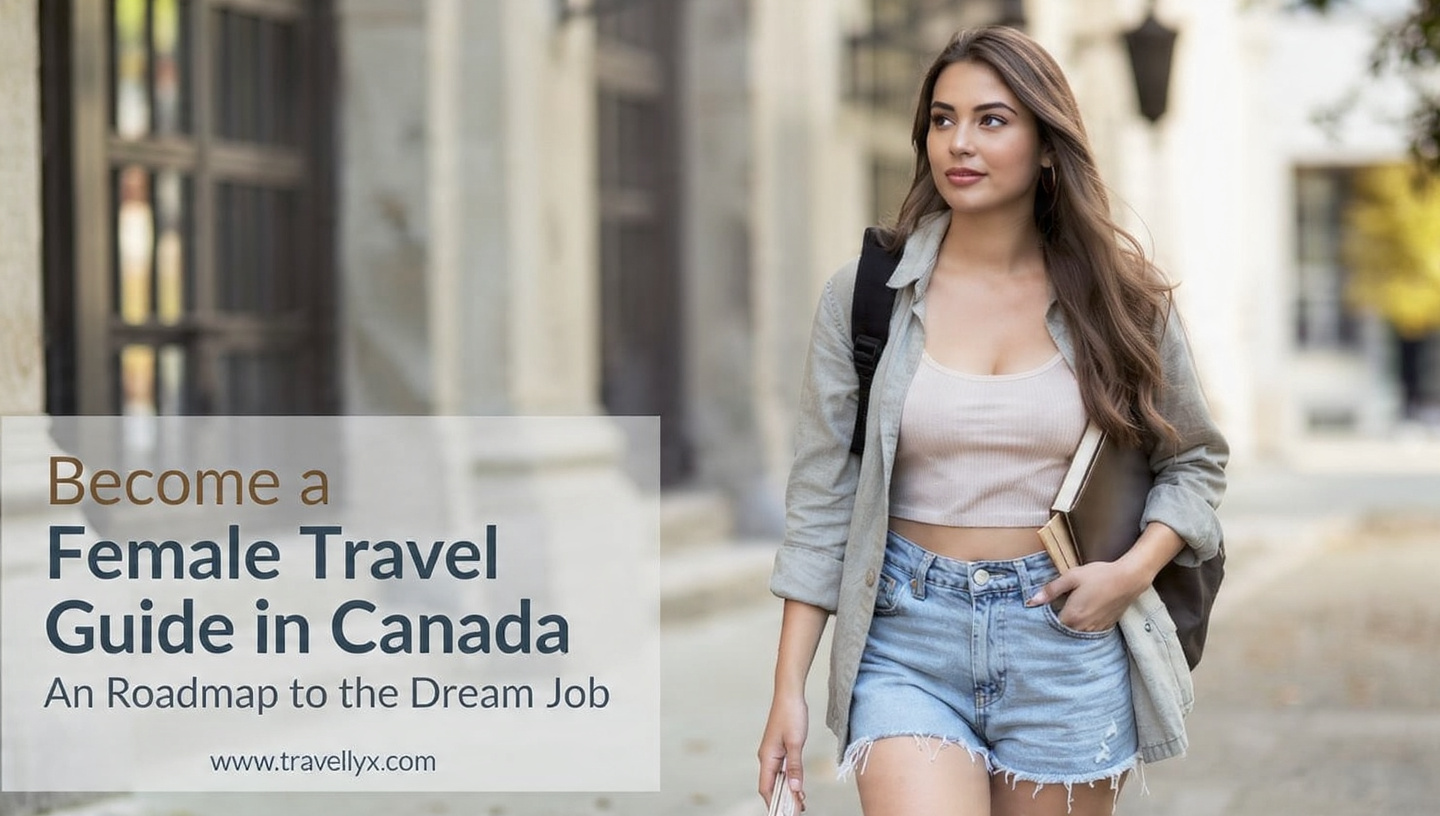
How to Become a Female Travel Guide in Canada: A Roadmap to the Dream Job
Your complete guide to breaking into the travel industry and leading adventures across Canada
Picture yourself leading a group through the turquoise waters of Moraine Lake, explaining the geology of the Rockies to awestruck travelers. Or guiding tourists through the cobblestone streets of Old Quebec, bringing history to life with every story. If you’ve been dreaming about ditching your desk job to become a female travel guide in Canada, you’re in the right place.
This isn’t just another generic career guide. We’re going to walk through the real path to becoming a travel guide in Canada, specifically addressing what women face in this field. From the certifications you actually need to the gear that fits your body, from handling difficult male clients to landing your first gig in Banff, we’ll cover it all.
The truth? Becoming a travel guide isn’t as simple as loving the outdoors. But it’s also not as complicated as government websites make it seem. Let’s break down exactly what you need to know.
The Reality Check: Is This Lifestyle Right for You?
Before you quit your job and head to the mountains, let’s get real about what this career actually looks like. The Instagram photos of sunrise hikes are beautiful, but they’re only part of the story.
The Romance vs. The Grunt Work (Luggage, Logistics, and Late Nights)
One experienced guide from G Adventures puts it bluntly: “I thought I’d be hiking all day, but 40 percent of the job is managing personalities and 20 percent is loading luggage. You’re a therapist first, a guide second.”
Here’s what a typical day actually involves. You wake up at 5:30 AM to prep breakfast. You check weather conditions and adjust the day’s route. You load gear into vans while answering the same question about bathroom breaks for the third time. You navigate group dynamics when Karen doesn’t want to share a tent with Susan. You stay up late doing paperwork and prepping tomorrow’s briefing.
The hiking and storytelling? That’s maybe four hours of your twelve-hour day.
The “Female Leader” Dynamic: Commanding Respect from Day 1
Let’s address the elephant in the hiking boot. As a woman, you’ll sometimes face clients who question your expertise simply because of your gender. A male client might ask if there’s “another guide” when technical decisions need to be made. Someone might mansplain GPS navigation to you despite your certifications.
The solution? The pre-brief. Before your first hike, do a technical briefing that establishes authority. Wear your radio and certifications visibly. Use specific terminology. When discussing the route, mention elevation gain in meters, identify plant species by Latin names, reference weather patterns with technical accuracy.
One veteran guide shared: “I learned to front-load my expertise in the first 30 minutes. Once they see you confidently handle a safety briefing and identify wildlife tracks, the doubt evaporates.”
The Certification Landscape: What You Actually Need
Here’s where things get confusing. Canada doesn’t have one unified “travel guide license.” Requirements vary by province and by the type of guiding you want to do. Let’s break down what matters.
The “Hard Skills”: WFR (Wilderness First Responder) and Driver’s Licenses
If you want to do any adventure guiding, the Wilderness First Responder certification is your golden ticket. This is an 80-hour intensive course that teaches you to handle medical emergencies in remote locations where help is hours or days away.
You’ll learn to stabilize spinal injuries, manage hypothermia, splint fractures with tree branches, and make evacuation decisions. It’s intense. It’s expensive (around $1,000). And it’s absolutely non-negotiable for wilderness guiding.
Top providers include Sirius Wilderness Medicine and Canadian Red Cross. Most WFR certifications are valid for three years.
National vs. Regional: TICO (Ontario) vs. BPCPA (BC)
In Ontario, if you’re selling travel packages or advice, you need to be registered with TICO (Travel Industry Council of Ontario). This involves passing an exam and maintaining registration.
In British Columbia, the BPCPA (Business Practices and Consumer Protection Authority) regulates travel agents, though many adventure guides work under company licenses rather than individual ones.
The key insight? If you’re working for an established tour company like Brewster, Rocky Mountaineer, or local operators, they typically handle the licensing. You need the skills certifications. They handle the regulatory paperwork.
Do You Need a Degree? (Spoiler: No, but…)
You don’t need a university degree to become a travel guide. Period. Some of the best guides in Canada never went to university.
What you do need: specific skills training. A two-year diploma in Adventure Tourism from Thompson Rivers University will get you further than a generic business degree. A three-month intensive at Yamnuska will open more doors than four years studying hospitality without outdoor skills.
That said, degrees in outdoor recreation, geography, history, or environmental science provide useful background knowledge. They’re helpful, not required.
Top Institutes and Training Programs for Women
Let’s talk about where to actually get trained. These programs vary wildly in cost, duration, and focus. Choose based on the type of guiding you want to do.
Adventure Focus: Thompson Rivers University (BC) and College of the Rockies
Thompson Rivers University – Adventure Guide Diploma
Location: Kamloops, British Columbia
Duration: 2 years
Cost: Approximately $15,000 for domestic students
What You Get: This program is the gold standard for adventure guiding in Canada. You’ll learn whitewater rafting, mountaineering, wilderness navigation, risk management, and business operations. The curriculum includes 400+ hours of field time.
Female Advantage: TRU has a strong network of female alumni who actively mentor new students. The program has roughly 40 percent female enrollment, higher than most adventure programs.
College of the Rockies – Adventure Tourism Business Operations
Location: Cranbrook, British Columbia
Duration: 2 years
Cost: Similar to TRU, around $14,000
What You Get: College of the Rockies combines guiding skills with business management. You’ll learn to lead trips AND run a guiding company. Great if you have entrepreneurial ambitions.
Culture/City Focus: ITHQ (Montreal) and Humber College
ITHQ – Tourism Guide Program
Location: Montreal, Quebec
Duration: 8 months to 1 year
Language: Offered in French and English
What You Get: Institut de tourisme et d’hôtellerie du Québec focuses on cultural and historical guiding. Perfect if you want to lead city tours, museum experiences, or cultural expeditions rather than wilderness adventures.
Humber College – Tourism Management
Location: Toronto, Ontario
Duration: 2-3 years (diploma or degree options)
What You Get: Humber provides comprehensive tourism education with guiding as one component. Good for those who want flexibility to work in various tourism roles.
The Gold Standard: Association of Canadian Mountain Guides (ACMG)
If you’re serious about mountain guiding, the ACMG is the ultimate certification. This isn’t a school, it’s a professional association with rigorous standards.
ACMG offers certifications in:
- Alpine guiding (summer mountaineering)
- Ski guiding (backcountry skiing)
- Rock climbing instruction
- Hiking and trekking
For city guiding without wilderness focus, the Canadian Tour Guide Association of BC offers short courses (2-4 weeks) focused on local history, customer service, and urban tour leading.
Overcoming the Challenges: Real Talk for Women
Let’s discuss the things other guides don’t always talk about openly. These challenges are real, but they’re manageable with the right strategies.
Physical Demands and “The Heavy Lifting” Myth
Yes, guiding is physically demanding. You’ll carry heavy packs, load kayaks onto trailers, and hike steep terrain. Here’s what employers worry about: can you handle the physical work?
The secret? Technique beats strength every time. Learn the “hip flick” for loading canoes. Use a loading ramp for kayak trailers instead of brute-forcing them. Practice proper lifting mechanics. Wear a quality pack that distributes weight to your hips, not your shoulders.
One 5’2″ guide in Jasper shared: “I’m the smallest person on our team. I also load boats faster than most of the guys because I learned proper technique. Nobody questions my ability anymore.”
Safety Protocols: Dealing with Harassment or Difficult Clients
This is uncomfortable but necessary to discuss. Occasionally, you’ll encounter clients who cross boundaries. Inappropriate comments. Unwanted touching. Aggressive behavior.
Reputable companies have zero-tolerance policies and support systems. Before accepting any guiding job, ask about:
- Harassment protocols and how they’re enforced
- Radio check-in systems (you should never be completely out of contact)
- Backup support if you need to remove a client from a trip
- Whether guides work in pairs or solo
Red flags to watch for: companies that dismiss your safety concerns, operations that send guides solo without radio contact, or places where other female guides have left quickly.
Practical safety strategies that work:
- The buddy system: many companies now pair guides on trips
- Scheduled radio check-ins every few hours
- Clear client code of conduct shared before trips begin
- Emergency whistle and pepper spray (legal in Canada with proper permits)
Gear That Fits: Why Men’s Packs Don’t Work for Us
This might seem minor but it’s huge. Most outdoor gear is designed for male body shapes. Women have different torso lengths, narrower shoulders, wider hips, and different weight distribution needs.
Wearing ill-fitting gear doesn’t just make you uncomfortable. It can cause injury. A pack that doesn’t sit right on your hips will destroy your shoulders after a few hours. Boots too wide in the heel cause blisters that end your season.
Invest in women-specific gear from brands that actually understand female anatomy. Osprey, Gregory, and Deuter make excellent women’s packs. Salomon and Scarpa offer boots in women’s lasts. Arc’teryx and Patagonia design technical clothing that fits properly.
Guide’s Gear Starter Kit
Let’s get specific about gear. Canada’s climate varies wildly from BC rainforests to Ontario cities to northern tundra. Here’s what professional female guides actually recommend:
Essential Footwear
Hiking Boots: Salomon Quest 4D GTX (women’s specific) or Scarpa Kailash Trek GTX. Both offer women’s lasts with proper heel fit. Budget: $250-350.
Camp Shoes: Teva or Chaco sandals for water crossings and evening camp. Essential for foot health on multi-day trips.
Pack and Carry Systems
Day Pack: Osprey Tempest 30 (women’s fit). Perfect for day hikes with clients. $180-220.
Multi-Day Pack: Gregory Deva 60 or Osprey Aura 65. These are designed for female torso proportions with adjustable hip belts. $300-380.
Pro Tip: Get professionally fitted at MEC or your local outdoor retailer. A proper fit is worth the time investment.
Technical Clothing Layers
Base Layer: Icebreaker merino wool or Patagonia Capilene. Avoid cotton always. You need moisture-wicking in Canadian weather.
Mid Layer: Arc’teryx Atom LT or Patagonia Nano Puff. Packable insulation that works in rain.
Rain Shell: Arc’teryx Beta AR or Outdoor Research Foray. This is not where you skimp. BC gets 3000mm of annual rain. You need waterproof, not water-resistant.
Pants: Fjallraven Vidda Pro or Prana Halle for hiking. Many guides swear by convertible pants for versatility.
Safety and Communication
Two-Way Radio: Motorola T600 or similar FRS radio. Most companies provide these but having your own shows professionalism. $100-150 per pair.
Headlamp: Petzl Tikka or Black Diamond Storm. Rechargeable LED with at least 300 lumens. $50-80.
First Aid Kit: Adventure Medical Kits Ultralight/Watertight. Supplement with personal medications and women-specific supplies. $40-60.
Whistle: Fox 40 Storm safety whistle. Loud, waterproof, essential. $8.
Navigation Tools
GPS Device: Garmin inReach Mini 2. Satellite communication and GPS tracking. This is your emergency lifeline in remote areas. $400 plus subscription.
Compass: Suunto MC-2 or Silva Ranger. Even with GPS, you need backup navigation. $40-80.
Maps: Laminated topographic maps for your region. Mark routes in dry-erase marker.
Women-Specific Essentials
Kula Cloth: Antimicrobial pee cloth. Seriously a game-changer. $20.
Sports Bra: High-impact support. Patagonia, Outdoor Voices, or Lululemon. You’ll be hiking 8-12 hours. Comfort matters. $50-80.
Sun Protection: Wide-brim hat, sunglasses with retention strap, SPF 50 sunscreen. Canadian sun at elevation is intense.
Total starter kit investment: $1,500-2,500. This seems expensive but remember, this gear lasts years and is tax-deductible as work equipment once you’re employed.
How to Land Your First Gig (The “Easy” Way)
You’ve got certifications. You’ve invested in gear. Now comes the hard part: actually getting hired. The good news? There’s a formula that works.
The “Resume Hack”: Highlighting Soft Skills
Here’s what hiring managers told us: technical skills get you to the interview. Soft skills get you the job.
Yes, list your WFR certification and Class 4 license. But also emphasize:
- Conflict resolution: “Mediated disputes between team members during university group projects” translates to managing client dynamics
- Public speaking: Any teaching, presenting, or performance experience shows you can command attention
- Crisis management: Even retail experience dealing with difficult customers demonstrates staying calm under pressure
- Language skills: Bilingual guides (English-French, English-Mandarin) are incredibly valuable and earn more
One hiring manager from Banff Adventures shared: “I can teach anyone to read a topographic map. I can’t teach someone to handle a client having a panic attack at 2,800 meters. Show me you can manage people.”
Where to Look: Workaway, CoolWorks, and Niche Boards
Forget general job sites. The guiding industry has its own hiring ecosystem:
- CoolWorks Canada: The gold standard for seasonal adventure jobs. Posts from Banff, Jasper, Whistler, and across Canada.
- GoodWork.ca: Focuses on eco-tourism and sustainable travel companies. Great values-aligned employers.
- ACMG Classifieds: Check the Association of Canadian Mountain Guides job board for high-end guiding positions.
- Backdoor Jobs: Lesser known but posts unique positions in remote locations.
- Company Websites: Major operators like Brewster, Rocky Mountaineer, and Fresh Tracks post directly on their careers pages.
Seasonal Strategy: The Banff/Jasper Hiring Loop
Here’s the insider secret: timing is everything. The hiring calendar looks like this:
January-February: Application season for summer positions. Companies finalize staffing for May-September season. This is prime time. Apply NOW if you want summer work.
March-April: Interviews and hiring decisions happen. Companies bring candidates to Banff/Jasper for in-person interviews and trial shifts.
May: Too late. Most positions filled. You might get last-minute openings from cancellations but you’re competing against locals.
September-October: Application season for winter positions. Ski guiding, ice climbing, aurora tours in Yukon and Northwest Territories.
The cold email strategy works too. Don’t just respond to job ads. In January, email tour operators directly:
“Hello, I’m a certified WFR with Class 4 license seeking adventure guiding positions for summer 2025. I noticed your company operates in the Columbia Valley. Are you hiring seasonal guides? I’d love to discuss how my backcountry experience and client management skills could contribute to your team.”
Short, professional, highlighting the plug-and-play qualifications employers need. Companies like Intrepid Travel, G Adventures, and local operators respond to direct outreach.
If you’re looking to expand your guiding skills across different Canadian regions, check out this comprehensive 4-week British Columbia itinerary to understand the diverse landscapes you might lead tours through. Understanding regional differences helps you target the right guiding opportunities.
Real Stories: Advice from Veteran Female Guides
We collected insights from female guides working across Canada. Here’s what they wish they’d known when starting:
“The first season is brutal. You’ll question everything. Push through. By season two, you’ll wonder why you ever did anything else. Also, learn basic vehicle maintenance. Changing a tire in the rain while clients watch establishes serious credibility.”
“I was terrified I didn’t know enough history. Then I realized clients don’t want a Wikipedia article. They want stories. The guide who can connect the Battle of the Plains of Abraham to modern Quebec politics in an entertaining way? That’s who gets repeat bookings and tips.”
“Get your WFR before anything else. I put it off because of cost. Huge mistake. Every employer asked about it in interviews. I lost three job opportunities before I finally got certified. It’s the baseline requirement, not optional.”
“Solo female travel is becoming huge in Canada. I read about the trend at TravellyX and it’s absolutely true. Companies specifically want female guides now because women travelers request them. Your gender is an advantage, not a barrier.”
“Don’t specialize too early. I started as a hiking guide, added kayaking, then rafting, then mountain biking. Each skill multiplies your employability. Companies love versatile guides who can run different trips throughout the season.”
FAQ: Salary, Seasons, and Stamina
Your Next Steps
Becoming a female travel guide in Canada is absolutely achievable. It’s not easy, but few worthwhile careers are. Here’s your action plan:
If you’re starting from zero (12-18 month timeline):
- Get your Wilderness First Responder certification this winter. Budget $1,000 and one week of intensive training.
- Obtain your Class 4 driver’s license. Takes 2-3 months with lessons and testing.
- Apply to training programs like Thompson Rivers University, College of the Rockies, or intensive programs like Yamnuska for next fall.
- Build fitness. Start hiking with a weighted pack progressively increasing distance and weight.
- Apply for positions in January for following summer season.
If you have outdoor experience already (6-12 month timeline):
- Get certifications you’re missing (WFR, driver’s license, specific skills training).
- Apply directly to tour companies in January. Target 15-20 applications.
- Consider volunteer positions or unpaid internships for first season to build resume.
- Network with current guides. Attend outdoor industry job fairs in Banff, Vancouver, and Canmore.
If you’re applying right now (immediate action):
- Visit CoolWorks, GoodWork.ca, and company websites today. Apply to every relevant position.
- Email 10-15 tour operators directly with your qualifications.
- If it’s past March, start preparing for next season instead. Use this year to gain certifications.
- Consider starting with volunteer guiding at local nature centers or hiking clubs to build experience.
The outdoor industry needs more women in leadership roles. Your perspective, your approach to client care, and your unique skills are valuable. The path requires investment in training, gear, and time. But for many women, it’s the career that finally feels right.
The mountains, forests, and cities of Canada are waiting. Your first group of excited travelers is out there ready to be inspired by your knowledge and passion. Every expert guide started exactly where you are now, uncertain but determined.
Start with one certification. Then another. Before you know it, you’ll be the one wearing the radio, leading the briefing, and guiding people through the adventure of a lifetime. Welcome to the community.