Why Central Asia Is One of the Best Spring Destinations for Solo Female Travelers
Why Central Asia Is One of the Best Spring Destinations for Solo Female Travelers
If you’re researching Central Asia solo female travel and wondering when to take the plunge, let me share something that might surprise you. While everyone talks about summer treks along the Pamir Highway, spring is actually when this region reveals its most welcoming face to solo women travelers. From late March through May, Central Asia transforms into a destination where cultural celebration meets natural beauty, creating the perfect environment for women exploring alone. This guide will show you exactly why spring solves many of the challenges solo female travelers face in this region and how to make the most of this magical season.
The Summer Trekking Myth: Why Everyone Gets Central Asia Timing Wrong
Most travel guides push summer as the prime time for Central Asia solo female travel, and it’s easy to understand why. July and August open up high-altitude destinations like the Pamir Highway and Song Kul Lake for camping under the stars. Travel bloggers fill Instagram with photos of yurt stays and mountain passes bathed in golden light.
But here’s the reality check that nobody talks about. Those same guides often mention feeling isolated on long bus rides through remote areas. They describe the challenge of meeting locals when everyone is busy with farming and tourism. They note the scorching heat in historic cities like Samarkand and Bukhara, where temperatures regularly exceed 40 degrees Celsius in peak summer.
Spring flips this script entirely. While the high mountains remain inaccessible until June, the cultural heart of Central Asia comes alive. The weather in cities stays comfortable, festivals fill the streets with celebration, and locals have time to welcome curious travelers into their homes and traditions.
The Temperature Sweet Spot
Spring temperatures in Central Asian cities range from 15 to 25 degrees Celsius during the day. You can explore ancient monuments in Samarkand without melting, walk through Bukhara’s old town in comfort, and enjoy outdoor markets without seeking shade every ten minutes. This comfortable climate means you’ll actually want to spend hours wandering through historical sites rather than rushing between air-conditioned spaces.
Why Spring Festivals Make Central Asia Perfect for Solo Female Travelers
The biggest advantage of spring for Central Asia solo female travel has nothing to do with weather or scenery. It’s about people. Solo travel’s primary challenge is loneliness, especially in cultures where group activities dominate social life. Spring solves this problem through Nowruz, the Persian New Year celebrated on March 21st.
Understanding Nowruz: Your Social Golden Ticket
Nowruz marks the spring equinox and represents the most important cultural celebration across Central Asia. Families prepare for weeks, cleaning homes, cooking traditional foods, and planning gatherings. The holiday atmosphere extends for nearly two weeks, creating countless opportunities for travelers to experience authentic hospitality.
For solo women, Nowruz offers something rare in travel: organic invitations into local life. Walking through a park in Tashkent during Nowruz, you’ll likely be invited to join family picnics. Visiting a bazaar in Almaty, vendors might offer you special holiday treats. Staying at a guesthouse in Bukhara, your hosts will almost certainly invite you to their family celebration.
The Safety Advantage of Festival Travel
Festival periods increase safety for solo female travelers in several ways. Streets fill with families and children, creating busy public spaces throughout the day and evening. The celebratory mood makes locals more open and friendly toward visitors. Police presence increases in tourist areas during major holidays. Most importantly, the family-oriented nature of Nowruz means you’re more likely to interact with women and families rather than navigating male-dominated spaces alone.
Beyond Nowruz: Other Spring Celebrations
While Nowruz dominates the spring calendar, other celebrations extend throughout the season. Tulip festivals in Kazakhstan bloom in April, attracting both locals and travelers to witness fields of wild tulips covering the steppes. May brings International Workers’ Day celebrations with parades and public gatherings in major cities. These ongoing festivities maintain the welcoming atmosphere established during Nowruz.
The continuous festival energy means you’re never far from a reason to connect with locals. A simple question about a parade or holiday tradition can spark conversations that lead to tea invitations, home-cooked meals, and genuine cultural exchange. This social accessibility transforms the solo travel experience from potentially isolating to surprisingly connected.
The Spring Bloom: Central Asia’s Secret Visual Spectacle
Travel content about Central Asia tends toward the rugged and dusty. Photos showcase desert landscapes, barren mountain passes, and ancient stone buildings against clear blue skies. This imagery attracts adventure seekers but misses another side of the region entirely.
The Flower Routes Nobody Talks About
Spring transforms Central Asia into an unexpected garden. The Tien Shan foothills in Kazakhstan explode with red poppies and wild tulips from late March through April. These aren’t cultivated gardens but vast natural displays covering entire hillsides. The Ili River valley near Almaty becomes particularly stunning, with tulip species that exist nowhere else on Earth.
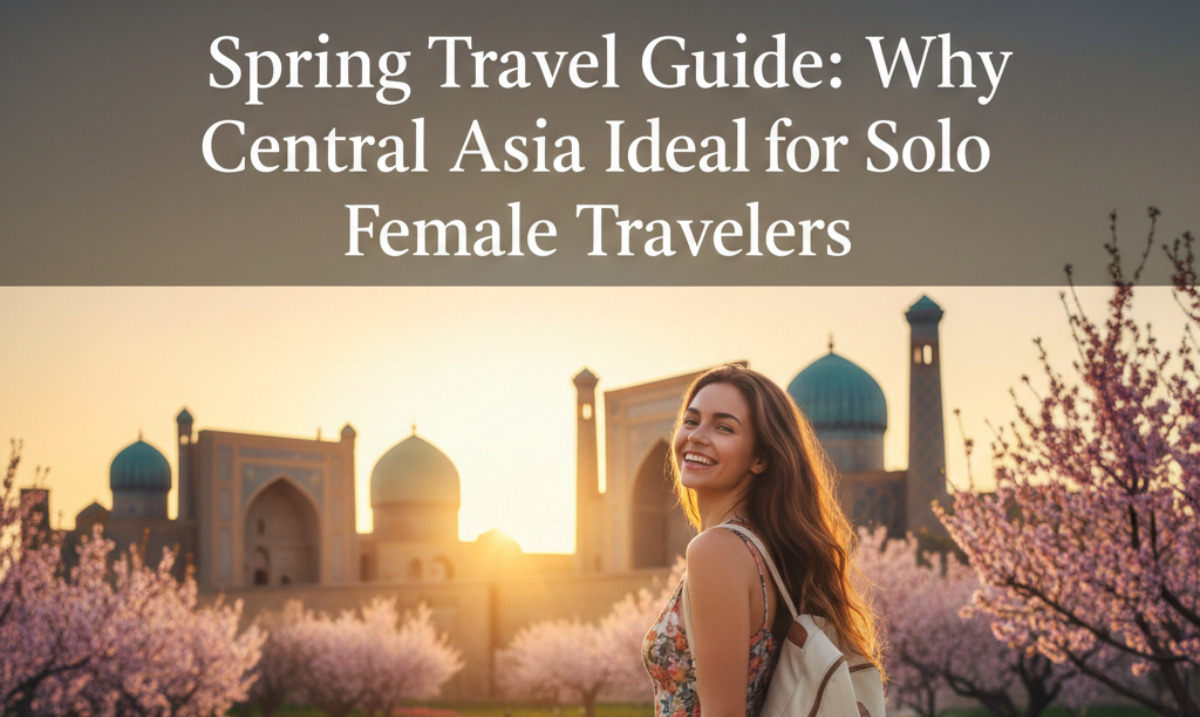
Uzbekistan’s desert landscapes undergo their own transformation. Red poppies blanket fields around Bukhara in April, creating surreal contrasts against ancient mosques and madrasas. Fruit orchards in the Fergana Valley burst into bloom, surrounding villages with white and pink blossoms. Even Samarkand’s urban parks fill with flowering trees that frame the famous blue-tiled monuments.
Photography Opportunities for the Instagram Generation
If you’re traveling partly for content creation, spring provides unmatched opportunities. The poppy fields near Bukhara offer vibrant red backdrops for portraits. Wild tulip meadows in Kazakhstan create stunning wide-angle landscape shots. Flowering trees frame Samarkand’s Registan Square differently than the stark summer imagery everyone else captures. You’ll return with photos that look completely different from the typical Central Asia content flooding social media.
The Soft Adventure Appeal
Not every solo female traveler seeks hardcore trekking adventures. Many want cultural experiences, historical exploration, and beautiful scenery without requiring technical skills or extensive camping gear. Spring caters perfectly to this soft adventure category.
Day hikes from Almaty access blooming meadows without overnight camping requirements. Walking tours through historic cities remain comfortable thanks to mild temperatures. Photography excursions to flower fields require minimal physical demands. This accessibility means Central Asia solo female travel in spring welcomes travelers of all fitness levels and adventure appetites.
Spring Itinerary Strategy: The Silk Road Cities Over Summer Extremes
Summer itineraries for Central Asia typically emphasize high-altitude destinations. The Pamir Highway through Tajikistan, mountain lakes in Kyrgyzstan, and trekking routes through Kazakhstan’s peaks dominate recommended routes. These areas remain largely inaccessible or uncomfortable in spring due to snow, mud, and unpredictable weather.
Spring demands a different strategic approach centered on the region’s cultural treasures.
The Golden Triangle: Uzbekistan’s Silk Road Masterpiece
Uzbekistan’s Golden Triangle connecting Samarkand, Bukhara, and Khiva represents the ultimate spring destination for Central Asia solo female travel. These cities contain some of the world’s most impressive Islamic architecture, now UNESCO World Heritage sites that once served as major Silk Road trading posts.
Samarkand deserves at least three full days. The Registan Square, with its three massive madrasas covered in turquoise tiles, looks spectacular in spring’s soft light without summer’s harsh glare. Shah-i-Zinda necropolis becomes a peaceful retreat with fewer crowds. The Bibi-Khanym Mosque complex allows hours of exploration in comfortable temperatures.
Bukhara works best with three to four days for solo travelers. The old city’s labyrinth of covered bazaars provides endless exploration opportunities. As a solo woman, you’ll find Bukhara particularly welcoming because many guesthouses are family-run, offering built-in social connections. The Ark Fortress, Kalon Minaret, and countless historic madrasas cluster within walking distance.
Khiva represents time travel to medieval Central Asia. The entire inner city, Itchan Kala, functions as an open-air museum surrounded by clay walls. Spring temperatures make walking these ancient streets pleasant, and the smaller scale compared to Samarkand or Bukhara creates an intimate atmosphere. Two days suffices for most travelers.
Why These Cities Beat Summer Destinations for Solo Women
Beyond avoiding summer heat, these Silk Road cities offer infrastructure advantages crucial for solo female travelers. Established guesthouse networks provide safe, social accommodation. Tourist police presence ensures additional security. Other solo travelers congregate here, creating opportunities to team up for day trips or meals. Restaurant and cafe culture exists, giving you spaces to work, read, or socialize. Most importantly, locals are accustomed to solo female tourists and have developed welcoming protocols.
Kazakhstan’s Urban Spring Experience
Almaty provides an entirely different Central Asia experience. This modern city of two million people offers sophistication unexpected by most travelers. Cafes serving excellent coffee line every block. Shopping malls rival any Western city. Parks and fountains create beautiful urban spaces.
For solo female travelers, Almaty represents an easy introduction to Central Asia. English speakers are common, especially among young people. Modern hotels and apartments provide Western comfort levels. The city’s safety record ranks high even compared to European capitals.
Spring transforms Almaty into an outdoor playground. The nearby mountains become accessible for day hikes without requiring overnight gear. City parks burst into bloom. Outdoor markets fill with fresh produce and flowers. The contrast between modern urban life and traditional culture creates fascinating daily experiences.
Kyrgyzstan’s Spring Compromise
Kyrgyzstan presents spring challenges because its main attractions involve mountain areas that remain partly inaccessible until May. However, the capital Bishkek and surrounding lower elevations offer worthwhile spring experiences.
Bishkek itself combines Soviet architecture with increasing modernization. The city’s relatively small size and walkability make it manageable for solo travelers. Ala-Archa National Park, just 40 kilometers away, offers day hikes from April onward as snow recedes.
The southern shore of Issyk-Kul Lake becomes accessible in May. This massive alpine lake creates its own microclimate, making surrounding areas warmer than mountain regions. Small resort towns along the shore provide affordable accommodation and stunning scenery without requiring camping skills.
Reality Check: Managing Spring’s Challenges
Spring in Central Asia isn’t perfect. Being honest about challenges helps you prepare properly rather than facing unexpected disappointments.
The Mud Season Problem
March and early April bring “mud season” to parts of Central Asia, particularly Kyrgyzstan. Melting snow combined with spring rains creates muddy conditions on unpaved roads and rural paths. If your ideal trip involves pristine nature walks, this reality might disappoint.
The solution involves adjusting expectations and planning accordingly. Focus on paved historical sites and cities in March and early April. Save nature excursions for late April and May when ground conditions improve. Choose destinations wisely—Uzbekistan’s dry climate means less mud overall, while Kyrgyzstan requires more weather awareness.
Variable Weather Demands Flexible Packing
Spring weather can shift dramatically within a single day. Mornings might require winter jackets while afternoons feel like summer. Sudden rain showers can interrupt outdoor plans. This variability demands smarter packing than summer’s predictable heat.
Spring Packing Strategy for Solo Female Travelers
Layer obsessively rather than packing single-purpose items. A light waterproof jacket serves multiple functions. Long-sleeve shirts in quick-dry fabric work for both sun protection and modest dress codes. Convertible pants offer flexibility. A large scarf becomes a wrap for cool evenings, a head covering for mosques, or a blanket for outdoor picnics. Quality walking shoes with some water resistance prove essential. Avoid heavy boots—you’re not trekking through mountains, so lighter footwear suffices.
Altitude Limitations
Accept that spring closes doors to certain experiences. The Pamir Highway won’t happen. Song Kul Lake camping isn’t possible. High-altitude yurt stays must wait for summer. Rather than viewing these as losses, recognize how spring opens different doors through festivals, comfortable weather, and social accessibility.
Many solo female travelers actually prefer spring’s limitations. Without the pressure to complete extreme adventures, you can focus on cultural depth rather than checking off bucket-list locations. You’ll spend more time in tea houses conversing with locals than hiking alone through remote areas. The trade-off favors connection over conquest.
Practical Safety and Logistics for Spring Travel
Getting Around as a Solo Woman
Transportation in Central Asia works differently than Western countries but remains manageable for solo women, especially in spring when weather cooperates.
Between major cities, overnight trains provide safe, affordable travel. Compartments lock from inside, and attendants monitor carriages. Female travelers can request women-only compartments when booking. The sleeper experience itself becomes part of the adventure, with opportunities to meet local families traveling between cities.
Shared taxis connect cities faster than trains but require more confidence. Drivers fill all seats before departing, so you’re never alone. Negotiate prices before entering the vehicle, and confirm your destination clearly. Many guesthouses can arrange reputable drivers if you’re uncomfortable with random taxi stands.
Within cities, ride-sharing apps like Yandex Taxi work in Tashkent and Almaty. These provide transparent pricing and driver accountability. For smaller cities without apps, hotels can call trusted drivers. Solo women should avoid walking alone late at night, not due to danger but simply following local norms that make evening streets quieter than Western cities.
The Guesthouse Advantage
Family-run guesthouses serve as social hubs and safety networks for solo female travelers. Owners act as informal guides, suggesting itineraries and warning about any issues. Fellow guests often team up for dinners or day trips, solving the solo dining awkwardness. Many guesthouses offer family-style meals where everyone eats together, creating instant community. Book through platforms with reviews so you can verify other solo women’s experiences.
Modest Dress Without Compromising Style
Central Asia requires modest dress but not to the extreme levels found in some Middle Eastern countries. Understanding the balance helps you respect local culture without feeling restricted.
Cover shoulders and knees as a baseline. Loose-fitting clothes work better than tight garments. However, this doesn’t mean shapeless hiking gear. Almaty and Tashkent are fashion-conscious cities where stylish modest clothing is the norm. Think flowy pants with fitted tops that cover the shoulders, or long skirts with modern blouses.
Spring’s variable weather actually helps with modesty. Layers naturally create more coverage. A light cardigan over a tank top solves the shoulder-covering requirement while remaining comfortable. Scarves serve multiple purposes for spring travel, functioning as both fashion accessories and practical covering for religious sites.
In mosques and sacred sites, head covering becomes mandatory. Most locations provide coverings, but carrying your own large scarf ensures you’re always prepared. The same scarf that protects against cool morning temperatures works perfectly for mosque visits.
Money and Connectivity
Cash dominates transactions throughout Central Asia. ATMs exist in major cities but become scarce in rural areas or smaller towns. Withdraw sufficient cash in capitals before traveling to secondary destinations. US dollars convert easily as backup currency.
Inform your bank about travel plans to prevent card freezes. Consider carrying two different bank cards stored separately for redundancy. Many guesthouses and some restaurants now accept card payments in tourist areas, but cash remains king.
Internet connectivity surprises most travelers with its quality in cities. Almaty and Tashkent offer excellent WiFi in cafes and hotels. Even smaller cities like Bukhara and Khiva provide reliable connections in accommodations. Purchase a local SIM card for mobile data between cities. Coverage exists along major routes, though remote areas lose signal.
Language Navigation
Russian functions as the common language across all Central Asian countries. Young people in tourist areas increasingly speak English, but outside major cities, Russian dominates. Learning basic Russian phrases dramatically improves your experience.
Key phrases to master include greetings, numbers for prices, basic food vocabulary, and simple questions. Many solo female travelers report that attempting Russian, even poorly, creates immediate warmth from locals who appreciate the effort.
Translation apps work adequately with internet connection. Download offline translation features before visiting areas with limited connectivity. Restaurant menus often lack English, making photo translation features particularly valuable.
Spring-Specific Activities Perfect for Solo Women
Nowruz Celebration Participation
Timing your Central Asia solo female travel around Nowruz opens unique doors. The celebration creates natural entry points into local life that don’t exist during other seasons.
Traditional Nowruz activities include visiting family and friends, sharing specific holiday foods, and attending public festivities. As a solo female traveler, you can participate in all these elements with surprising ease.
Public parks host massive celebrations with music, traditional sports demonstrations like wrestling and horseback games, and food vendors offering holiday specialties. These daytime events feel safe and welcoming, with families gathering in festive moods. Simply attending and showing interest often results in invitations to join group picnics.
Guesthouse hosts typically invite solo travelers to family Nowruz meals. These aren’t superficial tourist experiences but genuine family gatherings where you’ll meet multiple generations. The women of the house will likely involve you in food preparation if you show interest, creating opportunities for cultural exchange beyond simple conversation.
Nowruz Gift Etiquette
If invited to a Nowruz celebration, bringing a small gift shows respect. Sweets, particularly chocolate from your home country, work well. Flowers are appropriate, though avoid chrysanthemums which carry funeral associations. If you’re staying at a guesthouse and the host invites you to their family celebration, consider a slightly more substantial gift acknowledging their hospitality. Tea from your country, quality coffee, or children’s gifts if the family has kids all demonstrate thoughtfulness.
Photography Tours of Flower Blooms
The spring flower displays in Kazakhstan deserve dedicated day trips. Tour operators in Almaty organize tulip tours in April when the steppes bloom. These tours accommodate solo travelers by grouping small numbers together, solving transportation to remote areas while providing guide expertise.
The experience differs entirely from summer mountain tours. You’re photographing delicate wildflowers rather than rugged peaks. The tours move slowly, allowing plenty of time for photography and simply absorbing the surprising beauty of landscapes typically portrayed as barren.
Uzbekistan’s poppy blooms require less organization. Fields near Bukhara become accessible by taxi or even walking from accommodations in the old city. The spontaneous nature actually enhances the experience—you can visit at optimal morning or evening light without conforming to group schedules.
Cooking Classes and Food Experiences
Spring vegetables and herbs create ideal timing for cooking classes throughout Central Asia. Markets overflow with fresh produce that won’t return until the following year’s spring season.
Several Uzbekistan guesthouses offer cooking classes focused on traditional dishes like plov, manti dumplings, and samsa pastries. These classes typically happen in home kitchens, taught by the women of the family. As a solo female traveler, you’ll likely receive extra attention and instruction, and the intimate setting facilitates genuine conversation about daily life and culture.
Even without formal classes, simply shopping at spring markets provides cultural education. Vendors selling fresh herbs, young vegetables, and seasonal specialties often enjoy explaining their products to interested foreigners. The market atmosphere in spring feels particularly lively as locals stock up on ingredients for traditional spring dishes.
Silk Road Historical Deep Dives
Spring’s comfortable temperatures enable thorough historical exploration that summer heat makes uncomfortable. You can spend entire days wandering through massive complexes like Samarkand’s Shah-i-Zinda without wilting.
Consider hiring local guides in major historical sites. While guidebooks provide basic information, local historians share stories and details that bring ancient Silk Road cities to life. Many guides are women, which can create comfortable dynamics for solo female travelers seeking deeper cultural understanding.
The combination of fewer tourists in spring and pleasant weather means you can experience these UNESCO sites with contemplative quiet rather than summer’s crowds. Arriving at major monuments at opening time often grants you nearly private access for the first hour.
Budget Considerations for Spring Travel
Central Asia remains remarkably affordable for solo female travelers, with spring offering the best value in several categories.
Accommodation Costs
Guesthouse prices range from ten to thirty dollars per night for private rooms with private bathrooms. Family-run establishments typically cost less than boutique hotels but offer more cultural interaction. Spring rates often fall between winter low-season and summer high-season pricing, providing good value.
Major cities like Almaty and Tashkent offer hostel options starting around eight to ten dollars for dorm beds. However, solo female travelers often prefer private guesthouse rooms for the combination of privacy, safety, and social connection with host families.
Food Expenses
Eating out costs remarkably little. Local restaurants serve filling meals for three to five dollars. Fancier establishments in tourist areas charge eight to twelve dollars for complete dinners with appetizers and drinks. Markets sell fresh bread, fruit, and snacks for pocket change.
Spring’s abundance of fresh produce makes market shopping particularly rewarding. You can assemble picnic lunches from market purchases for minimal cost while enjoying seasonal specialties unavailable in other months.
Transportation Budgeting
Overnight trains between major Uzbek cities cost fifteen to thirty dollars for private compartments. Shared taxis range from five to twenty dollars per person depending on distance. City transportation via apps or metro systems rarely exceeds a few dollars daily.
Spring weather eliminates expensive climate-related costs. You won’t need to escape heat in expensive air-conditioned spaces. You won’t require heavy winter gear or heating accommodations. The moderate climate simply makes everything more affordable through reduced necessity for climate comfort.
Sample Spring Budget for Two Weeks
Accommodation: $280-400 (guesthouse private rooms)
Food: $150-250 (mix of local and tourist restaurants)
Transportation: $100-150 (trains, taxis, city transport)
Activities and Entrance Fees: $80-120 (historical sites, tours)
Miscellaneous: $100-150 (gifts, unexpected expenses)
Total Estimate: $710-1,070 for two weeks of comfortable mid-range travel
Budget travelers can reduce these costs significantly by choosing dorm accommodation and eating exclusively at local spots. Luxury travelers will find high-end boutique hotels and private tours available at fraction of Western prices.
Health and Wellness for Spring Travelers
Medical Preparedness
Central Asia’s medical facilities vary dramatically between major cities and rural areas. Almaty and Tashkent offer private clinics with English-speaking doctors charging reasonable fees by international standards. Smaller cities have basic facilities but limited English communication.
Travel insurance becomes essential for solo female travelers. Policies should cover medical evacuation, which provides peace of mind even if never needed. Verify your policy covers Central Asian countries specifically, as some exclude certain regions.
Pack a basic medical kit including standard pain relievers, antihistamines for spring allergies, altitude sickness medication if planning any mountain day trips, and any prescription medications in original packaging. Pharmacies in major cities stock most common medications, though brand names differ from Western products.
Food Safety in Spring
Spring brings fresh produce abundance, which generally improves food safety. Vegetables and fruits come fresh from farms rather than sitting in storage. However, standard precautions still apply.
Drink bottled water rather than tap water throughout the region. Ice in drinks poses minimal risk in established restaurants but avoid it in small street vendors. Fresh produce from markets should be washed thoroughly if eating raw.
The festival season sometimes means food sits at room temperature during celebrations. Use judgment about food that’s been sitting at outdoor picnics or street festivals. Cooked items staying hot remain safe, but room-temperature dairy products or meat dishes deserve caution.
Physical Wellness
Spring’s moderate temperatures reduce many physical challenges. Heat exhaustion and dehydration become non-issues compared to summer travel. However, spring brings its own considerations.
Allergies can intensify during peak bloom periods. If you’re sensitive to pollen, pack appropriate antihistamines. The spectacular flower displays that make spring beautiful also release significant pollen.
Variable weather demands flexibility. Don’t push through harsh spring storms for the sake of a schedule. The region’s infrastructure handles sudden weather changes well, with locals accustomed to adapting plans. Following their lead prevents unnecessary discomfort.
Cultural Immersion Opportunities in Spring
The Women’s World of Central Asia
As a solo female traveler, you’ll access aspects of Central Asian culture unavailable to male travelers or even couples. Women’s spaces exist throughout the region, from communal cooking preparations to bath houses to afternoon tea gatherings.
Spring’s festival season intensifies these female-focused activities. Women gather to prepare massive quantities of traditional foods for Nowruz. They coordinate household preparations and organize family celebrations. As a solo female traveler, particularly if staying in guesthouses, you’ll likely be invited into these preparations.
These interactions provide authentic cultural exchange. You’ll learn family recipes passed through generations. You’ll hear stories about daily life, marriage traditions, and modern changes. You’ll make connections that transform your trip from tourist observation to cultural participation.
Tea House Culture
Tea houses function as social centers throughout Central Asia, though they traditionally skew male in many regions. However, modern tea houses in tourist areas and cities welcome women, especially during daytime hours.
Spring weather makes outdoor tea house seating particularly pleasant. You can spend hours writing, reading, or people-watching over endless pots of green tea. Solo female travelers often find tea houses comfortable spaces for working or relaxing between activities.
The tea house experience teaches you about regional tea culture, the importance of hospitality rituals, and provides insight into daily social patterns. Many tea houses serve light meals, making them perfect spots for solo lunches without the awkwardness some cultures create around women dining alone.
Silk and Craft Workshops
Central Asia’s craft traditions remain alive, particularly in Uzbekistan. Spring is excellent timing for visiting silk workshops, pottery studios, and textile manufacturers as artisans ramp up production for tourist season.
Many workshops welcome visitors and demonstrate traditional techniques. Some offer hands-on classes in crafts like silk ikat weaving, ceramic painting, or embroidery. These experiences appeal particularly to solo travelers seeking meaningful activities and cultural learning.
The craft community includes many women artisans who enjoy sharing their skills with interested travelers. Language barriers fade when working with hands on shared creative projects. You’ll leave not just with souvenirs but with appreciation for traditional skills and personal connections to the artisans.
Frequently Asked Questions About Central Asia Solo Female Travel in Spring
Yes, Central Asia is generally safe for solo female travelers in spring. The region has low crime rates, and spring festivals like Nowruz create a welcoming atmosphere where locals actively invite travelers to celebrations. Women travelers report feeling safer here than in many Western cities, especially during the festive spring season. Standard precautions apply, such as avoiding walking alone late at night, but the overall environment remains very secure.
Pack layers for variable spring weather including waterproof jackets, modest clothing like loose pants and long-sleeve tops, comfortable walking shoes, a warm scarf that doubles as a head covering for mosques, sunscreen, and a small daypack. Spring weather can shift from cold mornings to warm afternoons, so versatile clothing is essential. Avoid heavy boots since you won’t be doing extreme trekking.
Late March through May is ideal for Central Asia spring travel. Late March offers Nowruz celebrations, April brings blooming tulips and poppies, and May provides warm weather before summer heat. Avoid early March when mountains are still snow-covered and weather is unpredictable. Late April through May offers the most reliable weather patterns.
Uzbekistan is the most beginner-friendly with its well-developed tourism infrastructure in cities like Samarkand, Bukhara, and Khiva. Kazakhstan offers modern cities like Almaty with excellent facilities. Kyrgyzstan provides more adventure opportunities but requires more travel experience. All three are safe and welcoming to solo women in spring, with Uzbekistan being the easiest starting point.
Visa requirements vary by nationality. Many countries can enter Uzbekistan visa-free for 30 days. Kazakhstan offers visa-free entry to many nationalities for up to 30 days. Kyrgyzstan provides visa-free access to most Western countries for 60 days. Always check current requirements for your specific nationality before traveling, as policies change periodically.
Nowruz is the Persian New Year celebrated on March 21st throughout Central Asia. It marks the spring equinox and is the region’s biggest cultural celebration. For solo female travelers, Nowruz offers unique opportunities to experience authentic hospitality, join family celebrations, and connect with locals in a festive, welcoming atmosphere. The holiday creates organic invitations into local homes and cultural experiences.
Making Your Spring Central Asia Dream Real
Planning Central Asia solo female travel for spring requires shifting away from the summer trekking narrative that dominates most travel content. Accept that you won’t access high mountains. Embrace that limitation as an opportunity to dive deeper into cultural experiences that actually suit solo travel better than remote wilderness camping.
Your First Steps
Start by choosing your primary country based on what appeals most. If ancient architecture and Silk Road history fascinate you, Uzbekistan should be your focus. If you want a mix of modern city life and nature access, Kazakhstan fits better. If you have some travel experience and want more adventure, Kyrgyzstan offers challenges and rewards.
Book a guesthouse in your entry city for the first few nights. This provides a secure base while you adjust to the region. Many solo travelers extend their initial stays when they realize how much there is to explore in single locations.
Join online communities of solo female travelers who have visited Central Asia. Their recent experiences provide practical details that guidebooks miss. Many travelers share guesthouse recommendations, safety updates, and festival timing that proves invaluable.
Managing Pre-Trip Anxiety
Solo travel to less-traveled regions naturally creates anxiety. Central Asia’s relative obscurity in mainstream tourism adds to uncertainty. However, thousands of solo women now visit the region annually, and spring’s social atmosphere makes the experience especially accessible.
Remember that you’re not pioneering unexplored territory. Well-established backpacker trails exist. English-speaking guides, tourist police, and foreigner-friendly accommodations serve multiple cities. The region has adapted to independent travelers while maintaining authentic cultural character.
Your biggest challenge won’t be safety or logistics. It will be accepting that travel here works differently than Western standards. Trains might depart late. Plans might change due to weather. Language barriers will create confusion. These aren’t problems to solve but experiences to navigate, and spring’s festive atmosphere makes those navigations feel adventurous rather than frustrating.
Your Spring Adventure Awaits
Central Asia solo female travel in spring offers something increasingly rare in modern tourism: authentic cultural immersion combined with physical beauty and genuine safety. While everyone else rushes to summer mountain destinations, spring travelers discover the region’s true heart in its celebrations, blooming landscapes, and welcoming people.
You don’t need to be an extreme adventurer. You don’t need perfect travel experience. You simply need curiosity, reasonable flexibility, and appreciation for cultures different from your own. Spring provides the perfect season to explore this fascinating region on your own terms, with natural built-in social opportunities that solve solo travel’s biggest challenge—loneliness.
The poppies bloom whether you’re there or not. The tulips carpet Kazakhstan’s steppes without audience. Nowruz celebrations happen regardless of tourist attendance. But experiencing these things yourself, as a solo woman navigating an unfamiliar region and discovering your own capability, transforms these moments from distant travel content into personal memories that reshape how you see both the world and yourself.
Spring in Central Asia awaits. Your timing is perfect.