Qantas A380 Incident: Wing Panel Peels Away on First Flight After Returning to Service
Qantas A380 Incident: Wing Panel Peels Away on First Flight After Returning to Service
A clear, simple report on what happened, why it matters, and what passengers should know.
What happened on the Qantas A380 flight?
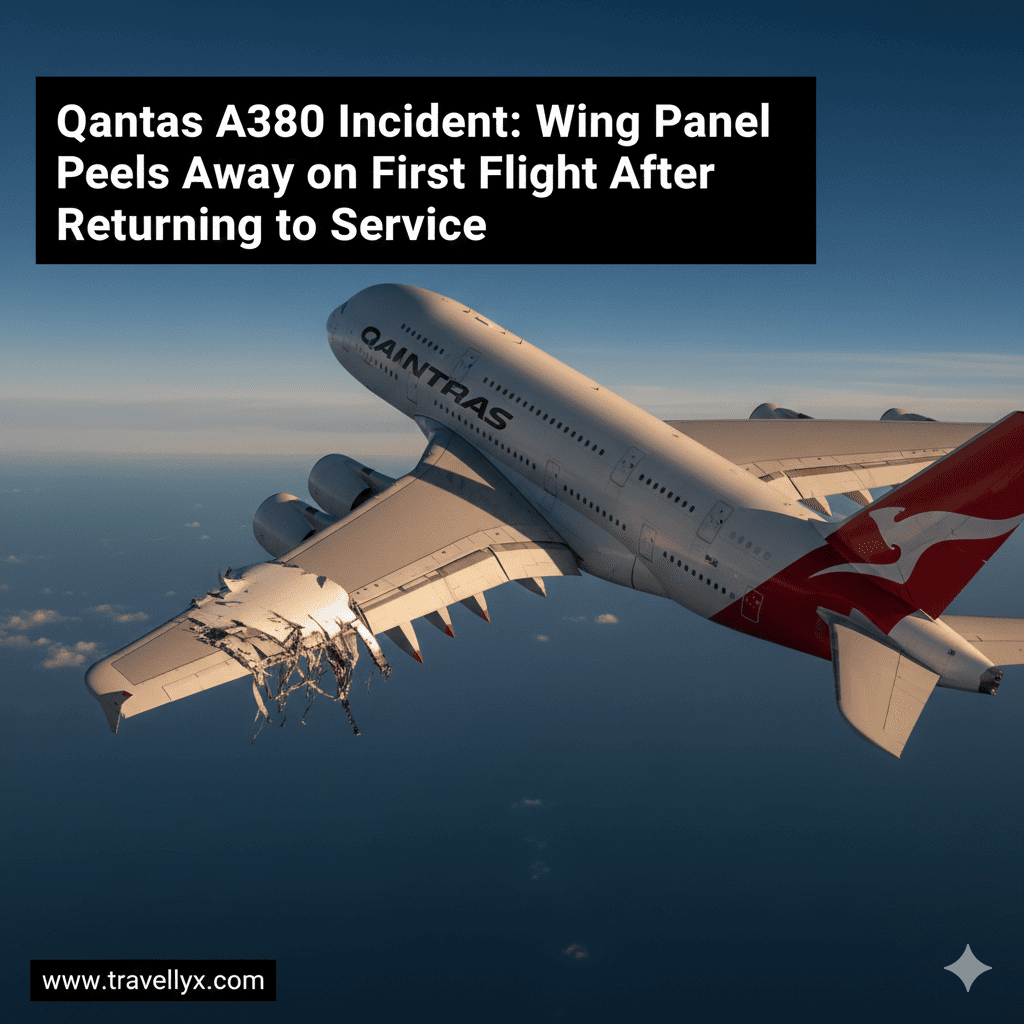
On the aircraft’s first commercial flight after being returned to service, a section of the left wing’s slat assembly peeled away and was found damaged after the plane landed in Los Angeles. The aircraft landed safely and passengers disembarked without injury, but the return flight was cancelled while engineers assessed the damage and waited for replacement parts.
Quick facts
- Aircraft: A Qantas Airbus A380 recently restored to service.
- Location: Landed safely at Los Angeles International Airport (LAX).
- Issue: Damaged wing slat / panel found after landing.
- Outcome: Flight landed safely; return flight delayed for maintenance.
Why the problem matters
Wing slats are movable parts on the front edge of a wing that help the plane during takeoff and landing. They are not the main structural part of the wing, but they are important for low-speed handling. Any sign of damage needs careful inspection. Even though the aircraft landed safely, the incident raises questions about maintenance, the reintroduction of long-stored planes, and how airlines check major components after long-term storage.
Safety first — obvious but important
It is worth noting that modern airliners are designed with many redundancies. Pilots train for many scenarios and the aircraft systems have backups. When an issue like a loose slat is discovered, engineers follow strict procedures to inspect, repair, and test the aircraft before it flies again.
Was anyone hurt?
No injuries were reported. Passengers described disruptions — some systems reportedly had problems during the flight — but the aircraft landed normally and passengers left without physical harm. The airline prioritised safety and grounded the plane until replacement parts and checks were complete.
What Qantas has said
Qantas confirmed a section of the slat on the left wing was damaged after landing in Los Angeles. The airline described the part as non-structural and said the aircraft had operated normally for the flight. Engineers inspected the plane on arrival and the airline delayed the return service while repairs were arranged.
What regulators might do next
Investigations vary with each incident. Regulators or safety agencies typically ask the airline for a report and may open a formal inquiry if the event meets certain thresholds. Even if regulators do not open a full investigation, airlines and maintenance teams will review procedures and documentation related to storage, refurbishment, and re-entry to service.
How this affects travellers
If you are booked on a flight affected by this aircraft, the airline will offer rebooking options and support. Delays and cancellations are frustrating, but airlines are required to care for passengers during disruptions. For future bookings, travellers can follow flight updates and check their airline’s official channels for the latest status.
Tips for passengers during airline disruptions
- Check the airline app and email for official updates.
- Contact customer service early for rebooking options.
- Keep receipts if you incur unexpected costs — you may be eligible for reimbursement.
- Stay calm and keep safety top of mind — airlines will prioritise safe operations over schedules.
Background: Why Qantas was returning A380s to service
During the pandemic many large aircraft were stored for long periods. Returning them to service requires heavy maintenance, inspections, and sometimes component replacements. Qantas undertook a large restoration effort for its A380 fleet, investing thousands of engineering hours into bringing aircraft back safely. Incidents like this one are reminders of how complex aircraft maintenance and reintroduction can be.
Common questions answered (short)
Can a plane fly with a damaged slat?
Pilots can often land safely if certain non-structural parts are damaged, because aircraft systems and procedures account for degraded configurations. That said, such damage usually requires inspection and repair before further commercial flights.
Will this change how airlines store planes?
This incident will likely lead to reviews and minor changes in inspection checklists or parts sourcing for returned aircraft — especially for parts exposed to the elements or that involve complex reinstallation procedures.
Final thoughts
While eye-catching, the incident resulted in no injuries and the aircraft landed safely — the outcomes passengers and travellers care most about. Still, it shines a light on the huge task airlines face when returning large planes to service after long storage. Expect official reports and follow-up statements from the airline and possibly aviation safety authorities in the coming days.
This article is written to explain the event clearly and simply for travellers and interested readers. It follows public reports from reputable news outlets and aviation sources. The aim is to summarise key facts and help you understand what to expect as a passenger.
Frequently asked questions
How to handle airline disruption like this (simple steps)
- Stay informed — follow the airline’s official channels for updates.
- Contact customer service for rebooking or refunds.
- Keep receipts for expenses caused by the delay.
- Check your travel insurance policy if you have delays or missed connections.
Last updated: December 10, 2025. This article summarises public reports and official airline statements available at the time of writing.