How to try Poland Food & Desserts : Pierogi, Bigos
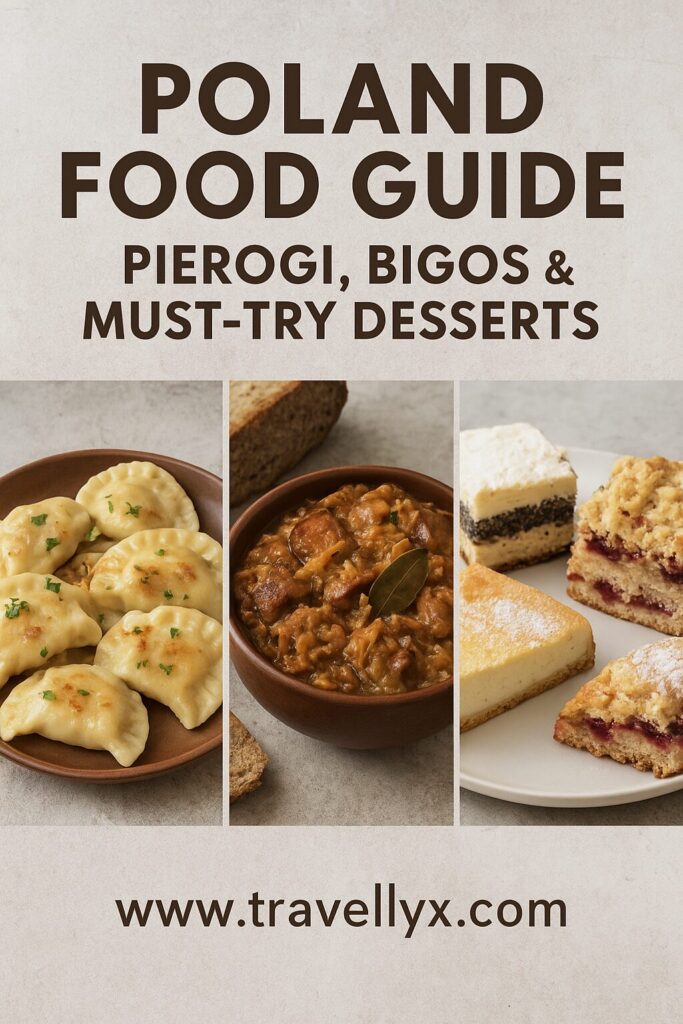
If you are planning a trip to Central Europe and your stomach is already rumbling just thinking about it, you have come to the right place. You are likely looking for a complete Poland food guide that cuts through the noise and tells you exactly what to eat. You want to know the real deal, not just the tourist traps. Well, get your appetite ready. We are about to dive deep into a cuisine that is hearty, comforting, and incredibly hospitable. By the time you finish reading, you will know exactly how to order the best pierogi, why you absolutely must try bigos, and which sweet desserts are worth saving room for.
Why Polish Food is Worth the Trip
Polish cuisine is the definition of comfort food. It was born out of a need to survive cold winters and fuel hard work. It utilizes ingredients that have grown in the region for centuries: potatoes, cabbage, beets, mushrooms from the vast forests, and various grains.
But it is more than just fuel. It’s history on a plate. Polish food is a delicious blend of Slavic roots mixed with influences from neighbors like Germany, Hungary, and even further afield. When you sit down to a traditional Polish meal, you are experiencing a culture that believes no guest should ever leave hungry. Portions are generous, flavors are deep, and everything tastes like it was made with love by a grandmother.
Pierogi: The Undisputed Icon of Poland
Let’s start with the undisputed heavyweight champion of any Poland food guide: Pierogi. You may have eaten something called “perogies” in the frozen aisle of your grocery store back home, but tasting them fresh in Poland is a completely different universe of flavor.
Pierogi are soft, half-moon-shaped dumplings made from unleavened dough. They are stuffed with a huge variety of fillings and then boiled in salted water. The secret to a great pieróg (that’s the singular word!) is delicate, thin dough that melts in your mouth, not thick or chewy dough that feels heavy.
The “Holy Trinity” of Savory Fillings
When you walk into a restaurant, the list of pierogi options can be long. Don’t panic. These are the three essential savory types you need to know:
- Pierogi Ruskie (Ruthenian Style): Despite the name sounding similar to “Russian,” these are distinctly Polish. The filling is a comforting mash of potatoes, white farmers’ cheese (called twaróg), and fried onions. They are savory, creamy, and utterly delicious. This is also a fantastic vegetarian option.
- Pierogi z Mięsem (Meat Filling): If you want something heartier, choose these. The filling is usually made from cooked beef or pork (sometimes poultry) that has been ground up and seasoned well with onions and spices.
- Pierogi z Kapustą i Grzybami (Cabbage and Mushroom): Another amazing vegetarian choice, especially popular during Christmas Eve dinner. They are filled with tangy sauerkraut (fermented cabbage) and earthy dried wild mushrooms gathered from Polish forests.
Sweet Pierogi Traditions
In Poland, pierogi are not just for the main course. Sweet versions are extremely popular, especially in the summer when fresh fruit is abundant. They are often eaten as a main meal on hot days, or as dessert.
The most popular sweet version is Pierogi z Jagodami (Blueberry Pierogi). These are stuffed with small, intensely flavored forest blueberries and usually served with sweet cream and sugar. Another classic is Pierogi z Serem, filled with sweetened farmers’ cheese, sometimes with a hint of vanilla or raisins.
Let’s be honest, having dumplings for dessert is a brilliant idea.Bigos: The Hunter’s Stew with History
If pierogi are the king of Polish food, Bigos is the emperor. Often translated as “Hunter’s Stew,” Bigos is a dish that dates back centuries and is practically a national obsession. It is the ultimate one-pot meal, perfect for cold autumn or winter days.
Understanding the Ingredients
There is no single “correct” recipe for Bigos. Every family and restaurant has its own version, and people will argue passionately about what should go into it. However, the foundation is always cabbage.
A true Bigos usually uses a mix of two types of cabbage: fresh shredded white cabbage and tangy sauerkraut. This combination gives the stew its characteristic sweet-and-sour flavor profile. Then come the meats. A good Bigos is a meat-lover’s dream, typically containing various cuts of pork, bacon, smoked sausage (kiełbasa), and sometimes beef. Traditionally, as the name suggests, venison or wild boar brought home by hunters would be added.
The Secret Ingredient is Time
You cannot rush a good Bigos. It is not a 30-minute meal. The magic happens through long, slow cooking. Traditionally, Bigos is cooked for hours, allowed to cool down completely, and then reheated the next day. This process might be repeated for three or four days.
Each time it is reheated, the flavors meld deeper together, the meats become more tender, and the cabbage turns a rich, dark brown color. It is often said that Bigos tastes best on the third day after it was made. It is usually served with thick slices of hearty rye bread to soak up the juices.
The Soups You Can’t Miss
In Poland, soup is serious business. It is almost always eaten as the first course of the main meal of the day. You could easily write an entire Poland food guide just about soups, but here are the absolute essentials.
Żurek (Sour Rye Soup)
If you only try one soup in Poland, make it Żurek (pronounced Zhoo-rek). It is unlike almost any soup in Western Europe. The base is made from fermented rye flour, which gives it a distinctively sour, tangy, and savory taste. It’s creamy, smoky, and complex.
Inside the soup, you will usually find chunks of white sausage and halves of hard-boiled eggs. The best way to eat it? Look for it served in a hollowed-out loaf of round bread (Żurek w chlebie). It’s a fun presentation, and you get to eat the bowl afterward!
Barszcz Czerwony (Red Borscht)
You might know borscht from other Eastern European countries, but the Polish version is distinct. It is a vibrant, deep red soup made from beets. The traditional Christmas Eve version is a clear broth, strained of all vegetables, and served with tiny mushroom-filled dumplings called “uszka” (which means “little ears”).
Other versions might be thicker and served with beans or potatoes. The flavor is a wonderful balance of sweet from the beets and savory from the broth.
Rosół (Traditional Chicken Noodle)
This is the taste of Sunday afternoon in a Polish home. Rosół is a clear, golden chicken broth that has been simmered slowly for hours with vegetables like carrots, celery root, and parsley. It is served with fine noodles and usually garnished with fresh parsley and slices of cooked carrot. It is simple, clean, and regarded as a cure-all for colds or a hangover.
Meat Lovers’ Favorites
While dumplings and stews get the spotlight, Polish main courses are equally satisfying. Pork is generally the meat of choice across the country.
Kotlet Schabowy
If Austria has Wiener Schnitzel, Poland has Kotlet Schabowy. This is a staple dinner item. It is a pork loin cutlet that has been pounded thin until tender, coated in flour, egg, and breadcrumbs, and then fried until golden crispy. It is almost guaranteed to be served with boiled potatoes topped with dill, and a side salad, such as “Mizeria” (cucumbers in sour cream) or braised cabbage.
Gołąbki (Cabbage Rolls)
The name translates literally to “little pigeons,” but don’t worry, no birds are involved. Gołąbki are hearty cabbage rolls. Soft boiled cabbage leaves are wrapped around a filling, usually made of minced pork and rice. These rolls are then baked or simmered in a tomato-based sauce or sometimes a creamy mushroom sauce. They are comforting and very filling.
Polish Kiełbasa (Sausage)
“Kiełbasa” is just the general Polish word for sausage, and there are dozens, if not hundreds, of varieties. They vary by region, the type of meat used, and the blend of spices (usually heavy on garlic and marjoram). You can buy them cold to eat with bread, or grilled over a fire as a popular street food snack.
A Sweet Finish: Must-Try Polish Desserts
Polish people have a serious sweet tooth, and their bakeries (called a cukiernia) are fantastic places to explore. You cannot finish your food tour without trying these iconic sweets.
Pączki (Polish Donuts)
Forget the donuts you are used to. Pączki (pronounced pown-ch-kee) are superior in every way. They are rich, fluffy, deep-fried yeast dough balls that are stuffed generously with filling. The traditional filling is rose hip jam or plum butter, but you can also find them filled with custard, chocolate, or advocaat cream.
They are usually topped with a sweet glaze and candied orange peel, or dusted heavily with powdered sugar. While they are eaten year-round, they are the star of “Fat Thursday,” the last Thursday before Lent, when Polish people collectively eat millions of them.
Sernik (Polish Cheesecake)
If you think you know cheesecake, prepare for a surprise. Polish Sernik is quite different from the smooth New York style. It is made using that special Polish farmers’ cheese called twaróg.
The result is a cheesecake that is slightly drier, more crumbly, and has a richer, tangy cheese flavor. Many variations exist—some have raisins inside, some have a chocolate glaze on top, and some have a lattice crust pastry. It goes perfectly with a strong cup of coffee in a cafe.
Makowiec (Poppy Seed Roll)
This is a very traditional dessert, especially popular around Christmas and Easter. It’s a yeast bread roll that is swirled tightly with a dense, dark, sweet filling made of ground poppy seeds, often mixed with honey, nuts, and raisins. It looks beautiful when sliced, showing the spiral pattern inside.
Navigating the Polish Dining Scene
To make the most of your culinary adventure and use this Poland food guide effectively, here are a few practical tips for eating out.
The Magic of the “Bar Mleczny”
For the most authentic and affordable experience, you must visit a Bar Mleczny, or “Milk Bar.” These are government-subsidized cafeterias created during the communist era to provide cheap meals to workers.
They are not fancy. You grab a tray, order at a counter (often from a menu only in Polish), pay very little money, and get a hearty, homemade-style meal. They are popular with students, seniors, and smart tourists. It’s a cultural experience as much as a dining one.
Exploring Poland through its food is an incredibly rewarding experience. The cuisine is honest, flavorful, and steeped in tradition. From the first bite of a buttery pierogi to the complex tang of a slow-cooked bigos and the sweet finish of a fresh pączek, your taste buds are in for a treat. So pack your stretchy pants and enjoy your trip. As the Polish say before a meal, Smacznego! (Bon Appétit!).
Frequently Asked Questions (FAQ)
The most famous Polish food is undoubtedly Pierogi. These are dumplings that can be stuffed with savory fillings like potato and cheese (Ruskie), meat, or cabbage and mushrooms, or sweet fillings like berries.
No, Poland is known for being a very affordable destination in Europe. Dining out, especially at traditional “Milk Bars” (Bar Mleczny), offers incredible value for hearty, filling meals.
A Milk Bar, or “Bar Mleczny”, is a type of Polish cafeteria that originated during the communist era to provide cheap meals. Today, they are beloved spots for locals and tourists to get authentic, homemade-style Polish food at very low prices.
Yes! While many dishes are meat-heavy, vegetarians have great options. The most popular are Pierogi Ruskie (cheese and potato dumplings), mushroom soups, various salads, and potato pancakes.