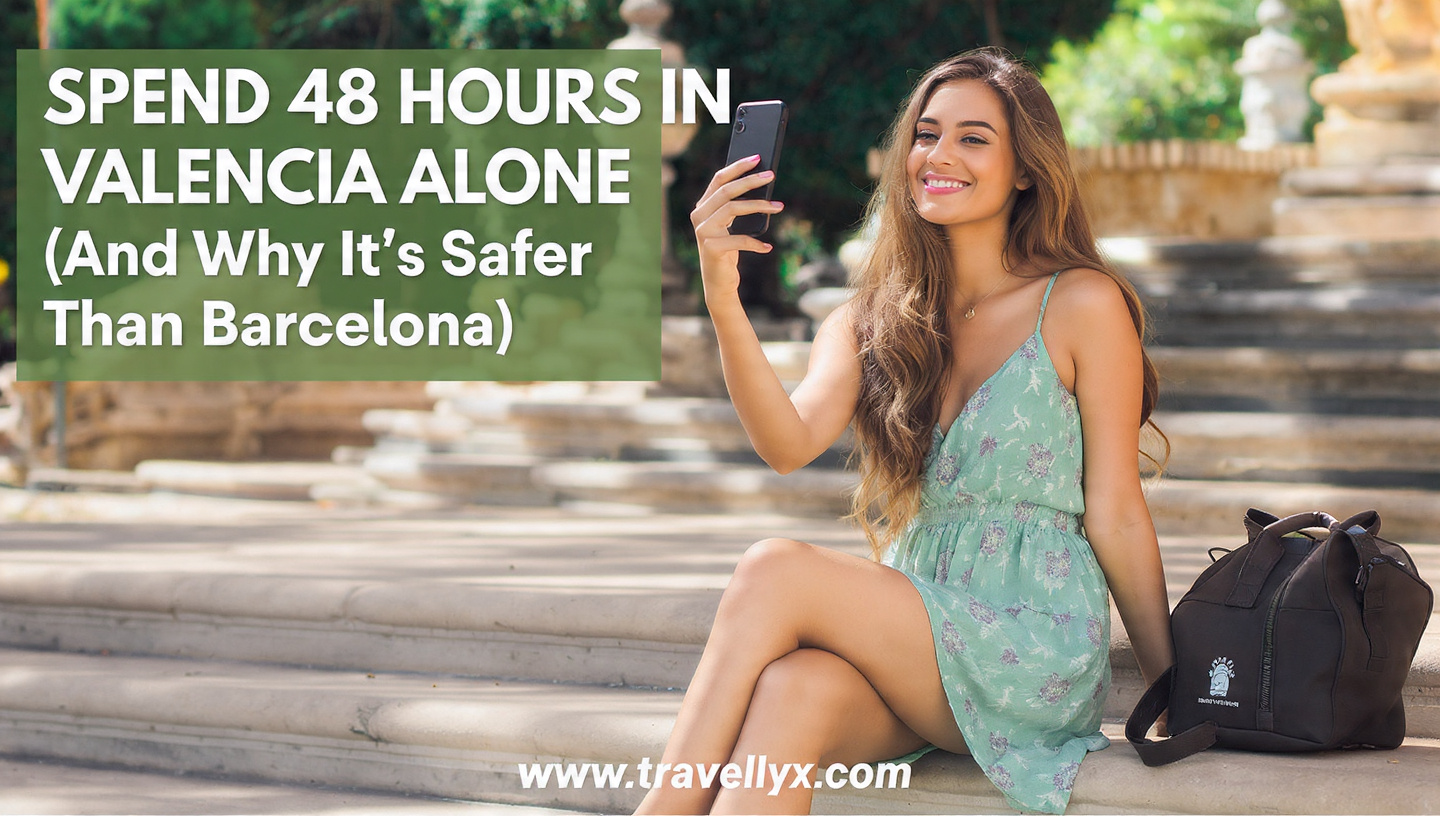
How to Spend 48 Hours in Valencia Alone (And Why It’s Safer Than Barcelona)
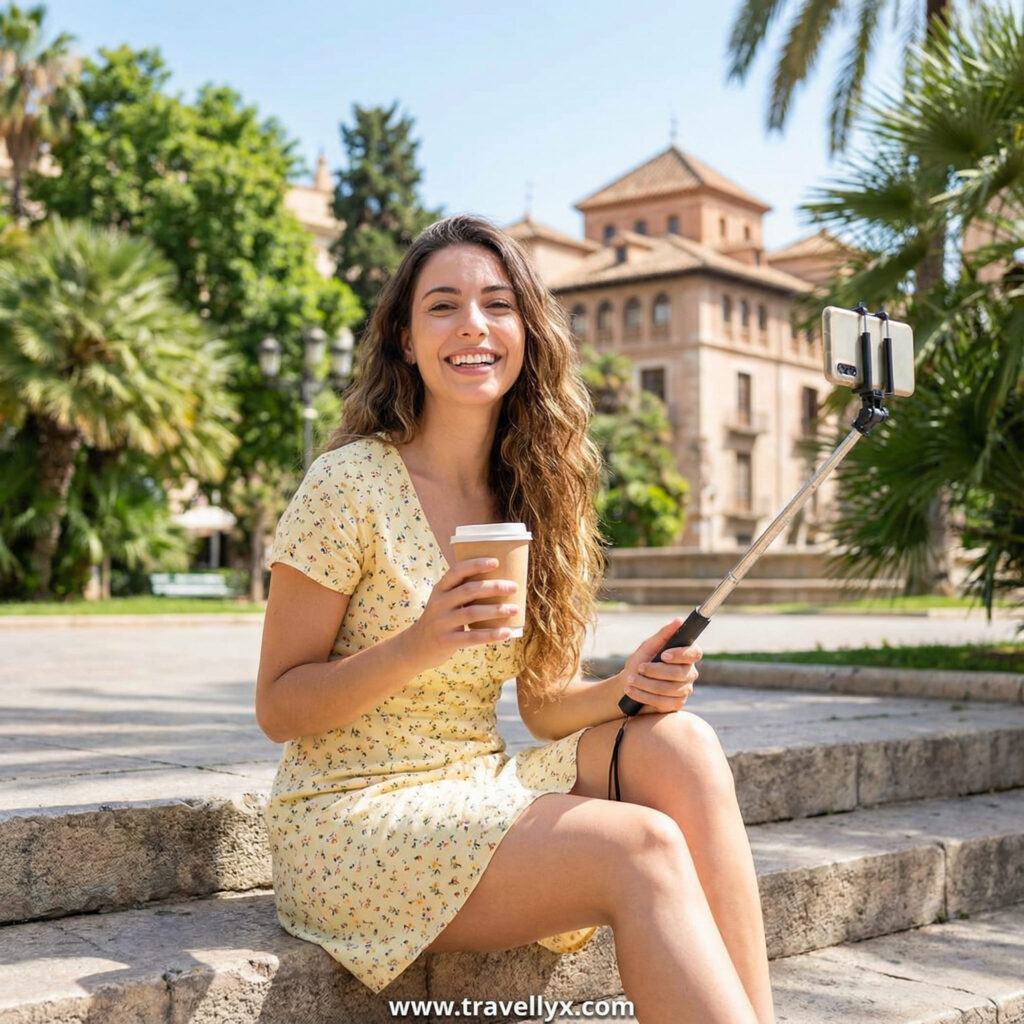
You’ve been planning your solo trip to Spain. Barcelona keeps popping up everywhere. But here’s what the Instagram posts don’t show you: the constant vigilance, the pickpocket anxiety, the exhaustion of always being “on guard.” What if I told you there’s a better option just two hours south?
Valencia offers everything Barcelona promises—stunning architecture, incredible food, Mediterranean beaches—but with one crucial difference: you can actually relax. This comprehensive guide will show you exactly how to spend 48 hours in Valencia as a solo traveler, why it’s genuinely safer than Barcelona, and how to solve the infamous “paella problem” that stumps every person traveling alone.
The “Low-Cortisol” Argument: Why Valencia Wins Over Barcelona
Let me paint you two pictures. In Barcelona, you’re walking through Las Ramblas. Your backpack is on your front. Your phone is buried deep in your pocket. You’re scanning crowds constantly. Your shoulders are tense. This is “defensive walking,” and it’s exhausting.
Now imagine Valencia. You’re strolling through the Turia Gardens at dusk. Your camera hangs casually around your neck. You stop to admire the sunset reflecting off the City of Arts and Sciences. A woman jogs past you, alone, earbuds in. This is “offensive enjoyment”—the ability to be present without constant threat assessment.
The difference isn’t just anecdotal. It’s measurable, observable, and consistently reported by solo travelers making the switch.
The Pickpocket Index: Reality vs. Reputation
The Numbers Don’t Lie:
Barcelona’s crime index hovers around 50-53 (classified as “high” by most safety databases). Valencia sits comfortably at 30-35 (classified as “low”). That’s not a minor difference. That’s the difference between spending your vacation paranoid and spending it present.
What does this mean practically? In Barcelona, pickpocketing is an industrial operation. Tourist hotspots like La Rambla, Sagrada Familia, and Park Güell have become hunting grounds. Skilled teams work the crowds with military precision.
Valencia has pickpockets. Every city does. But the scale is incomparable. The Tripadvisor forums tell the story: search “pickpocket” in Barcelona’s forum and you’ll find hundreds of recent reports. Do the same for Valencia and you’ll struggle to find a dozen.
One solo traveler on Reddit’s r/solotravel summed it up perfectly: “Barcelona is a thrill, but Valencia is a vacation. I didn’t have to check my pockets every five minutes.”
“Tranquilo” Vibes: Walking Home at Night Without Fear
Here’s the test that matters most for solo female travelers: Can you walk home at 11 PM without your heart racing?
In Barcelona’s Gothic Quarter, those narrow medieval streets feel atmospheric during the day and threatening after dark. Empty. Echoey. The kind of quiet that makes you walk faster.
Valencia has similar architecture—the same medieval layout, the same narrow streets. But the vibe is completely different. Locals call it “tranquilo,” and it’s not marketing speak. It’s a genuine cultural difference. Valencianos stay out late, not just in party districts but everywhere. The grandmother walking her dog at 10:30 PM. The family finishing dinner at midnight. This ambient population creates passive safety.
Solo Traveler Tip: Download the app “What3Words” before arriving. Valencia’s old town can be confusing, and taxi drivers don’t always understand English addresses. What3Words gives every location a unique three-word address in any language. It’s like having a universal translation device for locations.
Arrival & Logistics: The Stress-Free Start
Your solo travel Valencia 48 hours adventure begins the moment you land at Valencia Airport. Good news: this is one of the easiest airports in Europe to navigate alone.
Metro vs. Taxi: The Safe Way to Your Hotel
The Metro Option (Recommended): Valencia’s metro connects directly to the airport. Line 3 and Line 5 run every 20 minutes from 5:30 AM to midnight. The journey to the city center takes about 25-30 minutes and costs roughly 3.90 euros for a single ticket.
Why the metro wins for solo travelers: It’s predictable. No haggling over prices. No wondering if your driver is taking the scenic route. No language barrier stress. The stations are clean, well-lit, and monitored. You’ll see businesspeople, students, families—normal city life, not just tourists.
The trains themselves have women jogging home from the gym at 9 PM. That’s your safety barometer right there.
The Taxi Option: If you’re arriving late (after midnight) or carrying heavy luggage, taxis are safe and regulated. Official taxis are white with a blue stripe. The ride to the center costs 20-25 euros. Use the official taxi stand outside arrivals—never accept offers from random people inside the terminal.
Airport Hack: Before you leave the airport, grab a free map from the tourist information desk. Yes, you have Google Maps. Get the paper map anyway. Valencia’s old town will kill your phone battery, and a backup map means you’re never lost.
The “Safe Zones”: Best Neighborhoods for Solo Women
Not all Valencia neighborhoods are created equal for solo travelers. Here’s the honest breakdown, including the parts most generic guides won’t tell you.
Ruzafa: Hip, Busy, and Well-Lit (Best for Socializing)
The Vibe: Think Brooklyn’s Williamsburg or London’s Shoreditch. Ruzafa (locals spell it Russafa) is Valencia’s creative district. Street art covers the walls. Vintage shops line the streets. Restaurants spill onto sidewalks until 1 AM.
Why It’s Perfect for Solo Travel: Population density equals passive safety. The streets here are alive. Young professionals, artists, expat digital nomads—everyone gravitates to Ruzafa. You won’t stand out as a tourist. You’ll blend into a community of interesting people doing interesting things.
Where to Stay: Near Mercado de Ruzafa (the neighborhood’s covered market). This area has the best concentration of cafes, restaurants, and the general human activity that makes solo travelers feel comfortable.
Solo Dining Heaven: Counter seating and communal tables are the norm here. You can grab dinner at 9 PM and chat with the person next to you or read a book without anyone thinking it’s weird.
Ciutat Vella: Beautiful but Empty at Night (Stay Near Plazas)
The Vibe: This is Valencia’s historic heart. Stunning architecture, the Cathedral, the Silk Exchange—this is postcard Valencia.
The Complication: Medieval streets weren’t designed with street lighting in mind. After 11 PM, especially in the El Carmen district’s narrowest alleys, it gets genuinely quiet. Not dangerous, but isolated. And isolation feels different when you’re traveling alone.
The Solution: Stay near the plazas, not the alleyways. Plaza de la Reina, Plaza de la Virgen, and Plaza del Mercado remain populated late into the night. These squares have restaurants, outdoor seating, and ambient light. A hotel or Airbnb opening onto one of these plazas gives you the historic atmosphere with the social safety net.
Real Talk from Booking.com Reviews: Multiple solo female travelers report that while Ciutat Vella is generally safe, walking through the quieter streets of El Carmen after 11 PM can feel uncomfortable simply because they’re deserted. Not dangerous—uncomfortable. There’s a difference, but the difference matters when you’re alone.
El Cabanyal: Authentic Beach Vibes (Safety Caveats)
The Vibe: Former fisherman’s quarter. Incredible tiled houses (azulejos) that make every block Instagram-worthy. Walking distance to Malvarrosa Beach. Authentic paella restaurants that locals actually visit.
The Safety Gradient: El Cabanyal is gentrifying, which means it’s a neighborhood in transition. The blocks closest to the beach are renovated, hip, and safe. Three blocks inland, you’ll still find abandoned buildings and slightly gritty streets.
Who Should Stay Here: If you’ve traveled solo before and have good urban instincts, El Cabanyal offers amazing value and authentic Valencia culture. If this is your first solo trip, stick to Ruzafa or Ciutat Vella’s main plazas.
48 Hours in Valencia: The “Slow Travel” Itinerary
This isn’t a checklist designed to exhaust you. This is a sustainable rhythm that lets you experience Valencia without the stress-sprint of trying to “see everything.” Because here’s the secret nobody tells you: the magic of solo travel isn’t checking off landmarks. It’s having the time to sit in a plaza with a coffee and just observe.
Day 1: The Green River & Future City (Turia & Arts)
Morning: The Holy Grail (Literally) & Market Breakfast
Start your day at Valencia Cathedral (9 AM opening). Not for religious reasons, but because they claim to have the actual Holy Grail—the cup Jesus used at the Last Supper. Real or not, the cathedral is stunning, and arriving early means you avoid crowds.
After the cathedral, walk five minutes to the Central Market (Mercado Central). This is not a tourist market. This is where Valencianos shop for groceries. The architecture alone—art nouveau ironwork and colorful tiles—is worth the visit.
But you’re here for breakfast at Central Bar by Ricard Camarena. Here’s why this place is perfect for solo travelers: counter seating only. You face the kitchen and the barman, not an empty chair across from you. You can watch the cooks work, chat with the staff, or read your book. No awkwardness.
Order the “esmorzaret”—the Valencian power breakfast. Tomato on bread, jamón, a beer (yes, at 10 AM), and maybe some olives. When in Valencia, you follow local customs.
Solo Travel Pro Tip: Bring a small notebook or your phone. Taking notes or photos gives you “a thing to do” during meals. Not because you need an excuse to eat alone, but because having a focus makes you look purposeful rather than lonely. It’s a psychological trick, but it works.
Afternoon: Biking the Turia Gardens (Safest Park in Spain)
The Turia Gardens are Valencia’s superpower. In the 1950s, a massive flood devastated the city. Instead of rebuilding the river in the same place, Valencia rerouted it and converted the old riverbed into a 9-kilometer park running through the city’s heart.
This isn’t just any park. This is possibly the safest major urban park in Europe for solo travelers. You’ll see women running alone at 10 PM. Families picnicking at midnight. The park is the city’s living room, and everyone treats it that way.
Rent a bike from one of the many rental spots near the Turia. The path is completely flat, shaded by trees, and impossible to get lost on—it’s literally a dried riverbed, so you just follow it. Cycle from the old town toward the City of Arts and Sciences. The ride takes about 20-30 minutes at a leisurely pace.
Along the way, you’ll pass playgrounds, soccer fields, gardens, and random architectural installations. Stop whenever something catches your eye. That’s the luxury of solo travel—your schedule is entirely yours.
Evening: Sunset at the City of Arts and Sciences
You’ll see Valencia’s City of Arts and Sciences before you reach it. The white, futuristic structures rise from the green park like something from a science fiction movie. Santiago Calatrava designed this complex, and love it or hate it (Valencianos have opinions), it’s undeniably photogenic.
You don’t need to buy tickets to anything. The exterior is the show. Walk around the reflecting pools as the sun sets. The buildings glow gold, then pink, then deep blue as dusk arrives. Other people will be doing the same thing—couples, families, other solo travelers. You’ll blend in perfectly.
For dinner, bike back toward the old town and explore Ruzafa. This is where you’ll discover the joy of solo dining in Valencia, a topic important enough to deserve its own section.
Day 2: Old Charm & The Paella Pilgrimage
Morning: Silk Exchange & Hidden Ceramics
The Silk Exchange (La Lonja de la Seda) is a UNESCO World Heritage site and Valencia’s most beautiful building. The twisted columns in the main hall look like stone palm trees reaching toward heaven. It opens at 10 AM and is rarely crowded.
After the Silk Exchange, wander the old town without a specific plan. Duck into small ceramic shops (Valencia is famous for ceramics). Visit the Plaza de la Virgen and watch how locals interact with this central space—kids feeding pigeons, old men playing chess, tourists and locals coexisting peacefully.
This aimless wandering is harder than it sounds for Americans used to optimizing every moment. But learning to wander without purpose is a crucial solo travel skill. It’s where accidental discoveries happen.
Lunch: The “Paella Problem” Solved (Where to Eat Solo)
Now we arrive at the challenge that terrifies every solo traveler to Valencia: authentic paella.
The problem is real. Traditional paella is cooked in a large pan designed for minimum two people. Many restaurants will politely turn you away or charge you for two portions. This isn’t rudeness—it’s logistics. You can’t cook paella for one in a pan designed for five.
But solo travel Valencia 48 hours wouldn’t be complete without solving this uniquely Valencian challenge. Here are your options:
Palace Fesol: This restaurant specializes in individual paellas. They’ve figured out the cooking technique for smaller portions. It’s not cheap (expect 18-22 euros), but the quality is excellent, and you won’t feel awkward ordering alone. Reservation recommended, especially on weekends.
El Raco de la Paella: Traditional, wood-fired paella. Occasionally they’ll accommodate solo diners for a half portion, but call ahead to confirm. The advantage here is authenticity—this is where locals celebrate family occasions.
The Takeout Hack – Comidas Garrido: Here’s the secret weapon. Comidas Garrido is a no-frills restaurant that offers incredible takeout paella at a fraction of restaurant prices (around 8-10 euros per person). Order your paella to go, grab a cold beer from a nearby shop, and walk ten minutes to the Turia Gardens. Find a bench with a view. This is peak solo travel—freedom, authenticity, and zero awkwardness.
Paella etiquette for solo travelers: order the Valencian paella (chicken and rabbit) or seafood paella. Avoid the mixed versions—locals consider those tourist traps. Eat slowly. Paella is meant to be savored, not rushed. And yes, it’s okay to eat directly from the pan if you order the individual version. That’s traditional.
Afternoon: Beach Time in Malvarrosa
After paella, you need to walk. The traditional “digestive walk” is a Spanish custom, and Malvarrosa Beach is fifteen minutes from most paella restaurants.
Malvarrosa isn’t the world’s most beautiful beach. The sand is golden but nothing spectacular. The water is Mediterranean-calm but not Caribbean-turquoise. What makes it special is the vibe: working-class, authentic, unpretentious. This is where Valencianos come to swim, not pose.
For solo travelers, especially solo female travelers, beach safety is always a concern. Malvarrosa scores well. The promenade is wide, well-maintained, and constantly populated. Beach bars (chiringuitos) line the sand. You can rent a beach chair for 5-6 euros or just spread out your towel.
The afternoon beach crowd includes families, elderly couples, solo readers, and volleyball players. You won’t be the only person alone, which matters more than it should but absolutely does.
Stay until sunset if the timing works. The light turns honey-gold around 7 PM in summer, earlier in winter. Then catch the tram back toward the city center. Line 4 and Line 6 run frequently, and the ride takes about 20 minutes.
Solo Dining in Valencia: No “Table for One” Shame Here
Let’s address the elephant in every solo traveler’s anxiety: eating alone in restaurants. If you’re coming from Anglo-Saxon dining culture (US, UK, Australia), you’ve internalized that eating alone is somehow sad or awkward. The waiter’s pitying look when you say “just one.” The uncomfortable wait for your food with nothing to do but scroll your phone.
Spain in general—and Valencia specifically—doesn’t have this hang-up. Solo dining is completely normal. Not just accepted, but genuinely normal. You know why? Because Spanish dining culture is built around bars, and bars mean counter seating.
Here’s your strategy for confident solo dining in Valencia:
Strategy 1: Choose Counter Seating
Any restaurant with a bar automatically becomes solo-friendly. You face the bartender or the kitchen, not an empty chair. Conversation flows naturally with staff. Central Bar (mentioned earlier), Bodega Casa Montaña, and La Pepica all have excellent counter seating options.
Strategy 2: Time It Right
Eat during off-peak hours. In Valencia, that means lunch at 2 PM (before the 3 PM rush) or dinner at 8 PM (before the 9:30 PM crowd). Restaurants are quieter, staff are more attentive, and you won’t feel like you’re hogging a table that could seat a group.
Strategy 3: Embrace Tapas Culture
Order several small plates instead of one entrée. This gives you permission to linger. You’re not “done” after fifteen minutes. You can stretch a meal over an hour, people-watching between courses. Ca’n Bermudez and La Pilareta are perfect tapas spots for solo diners.
Strategy 4: The Reading Prop
Bring a book, journal, or Kindle. Not because you need an excuse to be alone, but because it signals to servers (and yourself) that you’re intentionally dining solo, not waiting for someone who’s running late. It’s a small psychological shift that makes a big difference.
And here’s something beautiful about Valencia specifically: the city maintains a strong lunch culture. Real, sit-down, multi-course lunches. The “menú del día” (menu of the day) is how locals eat lunch—a fixed-price menu with appetizer, main, dessert, and drink for 12-18 euros. These menus are designed for solo diners. Everyone at the bar is ordering one. You blend in perfectly.
Real Talk: What Google Reviews & Reddit Say About Safety
Generic travel guides won’t tell you this, but let’s look at what actual solo travelers report. I’ve compiled perspectives from Tripadvisor, Google Reviews, Booking.com comments, and Reddit’s r/solotravel forum:
From Tripadvisor (Solo Female Traveler, Age 28):
“I spent three days in Barcelona constantly stressed about my belongings. In Valencia, I forgot to check if my bag was zipped and nothing happened. It’s not that crime doesn’t exist—it’s that the baseline anxiety is completely different.”
From Reddit r/solotravel:
“Valencia is what Barcelona used to be twenty years ago. Authentic, affordable, and you’re not constantly side-eyeing people in crowds. 10/10 would recommend for first-time solo travelers.”
From Booking.com Review:
“Stayed in Ruzafa as a solo female traveler. Walked home from dinner at midnight multiple times. Never felt unsafe. The neighborhood is busy enough that you’re never truly alone on the streets.”
The consistent theme across hundreds of reviews: Valencia allows you to be present. Not vigilant, not defensive, but actually present in your experience. And isn’t that why you’re traveling solo in the first place?
Common sense still applies, of course. Don’t flash expensive jewelry. Don’t leave your phone on the table while you use the bathroom. Don’t accept drinks from strangers. But these are universal travel rules, not Valencia-specific paranoia.
The One Exception – Beach at Night: Multiple travelers mention that the beachfront promenade, while safe during the day, feels isolated after midnight. Not dangerous per se, but empty enough that solo travelers (especially women) report feeling uncomfortable. If you’re coming back late from a night out, take the tram or taxi rather than walking along the beach.
Building Your Solo Travel Confidence
Maybe this is your first solo trip. Maybe you’re rebuilding confidence after a breakup or major life change. Valencia is the perfect training ground because it challenges you without overwhelming you.
The language barrier exists but it’s gentle. Most people under 40 speak some English. Restaurant menus often have English translations. Google Translate fills the gaps. You’ll struggle sometimes, misunderstand orders occasionally, and that’s part of the growth.
If you’re looking to build confidence to travel alone, Valencia teaches essential skills: navigating public transit, eating in restaurants alone, asking strangers for directions, being comfortable in your own company. These skills transfer to every future adventure.
And if you’re specifically traveling solo after a breakup, Valencia’s gentle pace and welcoming atmosphere create space for reflection without loneliness. The city is social enough that you can connect with others when you want, but never so crowded that you can’t find solitude when you need it.
The Digital Nomad Factor
One reason Valencia feels safe for solo travelers: the city has a thriving digital nomad community. Not as famous as Lisbon or Bali, but substantial enough to create infrastructure.
Coworking spaces like Wayco and Vortex Coworking host regular community events. Coffee shops in Ruzafa have reliable WiFi and 220v outlets at every table. You’ll overhear English, German, French conversations mixing with Spanish.
Why does this matter for a 48-hour visitor? Because cities welcoming long-term remote workers develop services for solo travelers. Communal tables, English-speaking staff, and a general acceptance of people working/eating/existing alone become normalized.
If you’re considering longer stays or exploring digital nomad visas, Valencia offers an interesting option. Estonia’s e-Residency program combined with Spain’s new digital nomad visa makes Valencia legally accessible for remote workers from outside the EU. Something to research if your 48 hours turns into a “wait, I don’t want to leave” situation.
Practical Logistics: The Boring But Essential Stuff
Money: Spain uses the Euro. Credit cards work everywhere in Valencia, but carry 20-40 euros in cash for small purchases. The Central Market vendors often prefer cash. ATMs are abundant and safe (use machines inside banks during business hours when possible).
Phone/Internet: Most US and EU phones work seamlessly. If you’re visiting from outside Europe, consider an Orange Holiday SIM (available at the airport) for about 30 euros. It includes 30GB data and unlimited calls within Europe. Much cheaper than international roaming.
Language: The official language is Spanish (Castilian), though locals also speak Valenciano (a Catalan dialect). English is common in tourist areas, less so in local neighborhoods. Learn these essential phrases: “Una mesa para uno, por favor” (A table for one, please), “La cuenta, por favor” (The check, please), “¿Dónde está…?” (Where is…?).
Tipping: Not obligatory in Spain. Rounding up or leaving small change (1-2 euros) is appreciated but not expected. Don’t feel pressured to tip 15-20% like in the US.
Siesta Reality Check: Yes, many smaller shops close from 2 PM to 5 PM. But restaurants, museums, and major attractions stay open. Plan museum visits for siesta hours when you need air conditioning and a break from walking.
What to Skip (An Honest Assessment)
Valencia guides always list the same attractions. But with only 48 hours, you should skip these:
The Oceanographic: It’s impressive—the largest aquarium in Europe. But it takes 3-4 hours and costs 30+ euros. Unless you’re a serious marine biology enthusiast, those hours are better spent wandering neighborhoods or relaxing at a beach bar.
Torres de Serranos: The medieval towers are photogenic from outside. Climbing them offers minimal additional value for solo travelers. Save the 2 euros and the leg workout.
Bioparc: Great zoo, but it’s far from the city center (30-minute metro ride). With only two days, the travel time doesn’t justify the visit unless animals are your primary interest.
Solo travel means you can be selfish with your time. Only do things that genuinely interest you, not things you “should” see because they’re famous.
Extending Your Stay (If 48 Hours Isn’t Enough)
Most solo travelers planning two days in Valencia end up wishing they’d booked four. Here’s what to add if you extend:
Day 3 – Albufera National Park: Take a local bus (45 minutes) to this massive lagoon south of Valencia. This is where authentic paella was invented. Villages like El Palmar serve traditional recipes in waterfront restaurants. Rent a boat, watch the sunset over rice fields, and experience rural Spain without the crowds.
Day 4 – Day Trip to Xàtiva: A medieval town with a hilltop castle, forty-five minutes by train from Valencia. Almost zero tourists, incredible views, and a glimpse of authentic small-town Spanish life. Perfect for solo travelers who want to test their Spanish skills without the safety net of English-speaking staff.
Both extensions maintain Valencia’s low-stress vibe while adding depth to your experience. Neither requires a car, both are accessible by public transit, and both are significantly less touristy than Valencia proper.
Frequently Asked Questions
Yes, Valencia is considered very safe for solo female travelers. With a crime index around 30-35 (compared to Barcelona’s 50+), Valencia offers a relaxed atmosphere where you can walk at night without constant vigilance. The neighborhoods of Ruzafa and central areas near plazas are particularly well-lit and populated until late. Standard travel precautions apply, but the baseline anxiety level is significantly lower than in Barcelona or Madrid.
While traditional paella is served for minimum two people, several restaurants accommodate solo diners. Palace Fesol offers high-quality paella for one person. Alternatively, you can get takeout paella from Comidas Garrido and enjoy it in Turia Park, or visit Central Bar by Ricard Camarena inside the Central Market for counter seating and smaller portions. The key is knowing where to go—generic tourist restaurants often won’t accommodate solo paella orders.
48 hours (2 days) is perfect for experiencing Valencia’s highlights as a solo traveler. This gives you enough time to explore the Turia Gardens, City of Arts and Sciences, historic old town, try authentic paella, and relax at Malvarrosa Beach without feeling rushed. If you fall in love with the city (which is common), three to four days allows for day trips to Albufera National Park or nearby medieval towns like Xàtiva.
Yes, Valencia is generally safer than Barcelona for tourists. Barcelona has a higher crime index (50+) with frequent pickpocketing in tourist areas like Las Ramblas and near Sagrada Familia, while Valencia maintains a lower crime index (30-35). Travelers consistently report feeling more relaxed in Valencia, without needing to practice defensive walking or constantly check their belongings. The difference is significant enough that many solo travelers specifically choose Valencia over Barcelona for this reason.
Solo travelers should stay in Ruzafa for a hip, social atmosphere with great nightlife and restaurants, or near Plaza de la Reina in Ciutat Vella for central access to historic sites. Both areas are well-lit, busy until late, and feel safe. Avoid staying deep in the quiet medieval streets of El Carmen district if you’re nervous about walking alone at night. El Cabanyal near the beach is also good for experienced solo travelers seeking authentic local vibe.
April through June and September through October are ideal for solo travel Valencia 48 hours trips. The weather is pleasant (20-25°C), crowds are manageable, and beaches are accessible without summer madness. Avoid August when many locals vacation elsewhere and temperatures exceed 35°C. March brings Las Fallas festival—spectacular but extremely crowded and expensive, not ideal for first-time solo travelers seeking the tranquilo Valencia experience.
Final Thoughts: Why Valencia Changes Solo Travelers
Here’s what nobody tells you about solo travel: the destination matters less than how the destination makes you feel. You can visit the most beautiful city in the world, but if you spend the entire time anxious and defensive, you’ll miss the experience.
Valencia is remarkable not because it’s more beautiful than Barcelona (that’s debatable) or because it has better food (also debatable). Valencia is remarkable because it allows you to be present. To stop scanning crowds for pickpockets and start actually looking at the architecture. To eat dinner slowly instead of rushing through meals. To walk home at night thinking about the sunset you just saw instead of whether someone is following you.
This is the “low-cortisol” benefit the article promised at the beginning. Stress hormones drop. Shoulders relax. You remember why you wanted to travel solo in the first place—not to prove anything, but to experience something.
So yes, spend 48 hours in Valencia. Follow this itinerary or completely ignore it. Eat paella alone or skip it entirely. Stay in Ruzafa or book a beach hotel. The specifics matter less than the permission Valencia gives you to travel at your own pace, make your own choices, and be comfortable in your own company.
That’s the real gift of solo travel in Valencia. Not what you see, but who you become when you’re not performing for anyone else. And that person? That person is pretty great.
Ready to Book Your Solo Valencia Adventure?
Start with accommodation in Ruzafa or near Plaza de la Reina. Book a bike rental for the Turia Gardens. Make a reservation at Palace Fesol if you’re particular about paella. And then? Leave space for the unexpected. The best solo travel stories aren’t planned—they’re discovered in the margins between itinerary items.
Valencia is waiting. And unlike Barcelona, it’s not going to pick your pocket while you’re trying to enjoy it.