
From Celebration to Catastrophe: The Full Story of the Le Constellation Fire
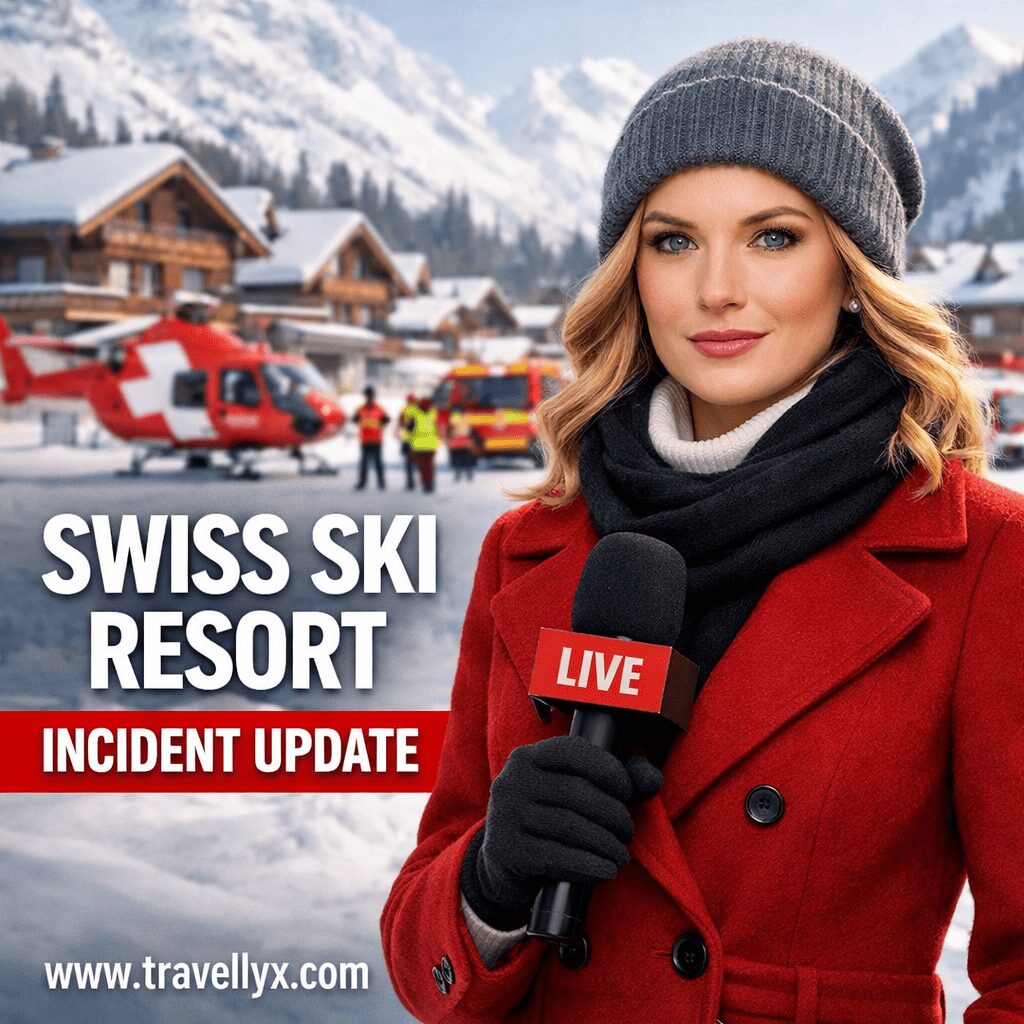
Breaking Update: If you’re searching for information about the devastating Swiss ski resort fire that occurred on New Year’s Eve 2026, this comprehensive article provides you with verified facts, survivor testimonies, government responses, and crucial safety information. Forty lives were lost, and 119 people were injured in what has become one of Switzerland’s deadliest modern tragedies.
The first hours of 2026 should have been filled with celebration and hope. Instead, the upscale Alpine resort of Crans-Montana became the site of unspeakable tragedy. At approximately 1:30 AM on January 1st, a fire tore through Le Constellation, a popular bar and nightclub, turning New Year’s revelry into catastrophe. What began as sparklers on champagne bottles ended with forty people dead and more than one hundred seriously injured.
This wasn’t supposed to happen in Switzerland. Known for some of the strictest fire safety regulations in Europe, the Alpine nation found itself grappling with a disaster that has shaken the entire country to its core.
1:30 AM: How a Night of Joy Turned into a Night of Horror
Le Constellation was packed. Hundreds of people—many of them young tourists from across Europe—had gathered to ring in the new year at one of Crans-Montana’s most popular venues. The bar, which had been operating for over forty years, was known for its lively atmosphere and international crowd.
Then, in an instant, everything changed.
What Triggered the Inferno?
According to Beatrice Pilloud, the Valais canton Attorney General, preliminary investigations point to a devastating chain reaction. Champagne bottles topped with fountain sparklers were being carried through the crowd when they came too close to the ceiling. The ceiling, which investigators suspect was lined with acoustic foam, ignited within seconds.
Axel Clavier, a sixteen-year-old survivor from Paris, described the chaos to the Associated Press. “It was total panic,” he recalled. “The ceiling just went up in flames. I couldn’t breathe. I hid behind a table and then used it to smash through a window.”
Cellphone footage captured the terrifying first moments. Flames raced across the wooden ceiling of the basement level as panicked partygoers scrambled for exits. What fire safety experts call a “flashover” occurred—a phenomenon where heat builds so rapidly that the entire room ignites almost simultaneously.
The Deadly Bottleneck
The bar’s layout turned tragic. Witnesses described a narrow, single staircase as the main exit from the basement area—a bottleneck that became a death trap as hundreds tried to flee at once. Many survivors reported breaking plexiglass windows with chairs and tables to escape the inferno.
Outside, temperatures had plummeted well below freezing. Survivors stumbled into the snow, many with severe burns, while local residents rushed to help. “People were lying on the snow with jackets over their faces,” recalled Samuel Rapp, a local resident. “The smell of burning was everywhere.”
Sparklers, Foam, and Fatal Mistakes: What Caused the Blaze?
The investigation into the Crans-Montana fire is focusing on two critical elements: the sparklers used during the celebration and the materials used in the bar’s ceiling.
Understanding Flashover: A Technical Breakdown
A flashover is one of the most dangerous fire phenomena. It occurs when heat accumulates at ceiling level, causing combustible gases to reach their ignition temperature. Within seconds—sometimes less than five minutes—the entire space can become engulfed in flames. The combination of acoustic foam (if it was non-compliant) and wooden structural elements created the perfect conditions for rapid fire spread.
Switzerland’s fire safety regulations are among the strictest in Europe. The Swiss Fire Safety Association requires that public venues holding 200 or more people must have multiple clearly marked exits, smoke ventilation systems, and furnishings certified as non-flammable. Any interior pyrotechnics require special permission from authorities, issued only under very strict conditions.
According to Crans-Montana Mayor Nicolas Féraud, the bar had undergone annual or bi-annual fire inspections by town authorities. However, he declined to provide details about what those inspections found. The bar had been remodeled in 2015 by a married couple from Corsica who owned several establishments in the region.
The “Sparkler Culture” in Luxury Resorts
Fountain sparklers on champagne bottles have become increasingly popular in upscale nightlife venues across Europe. These pyrotechnic devices shoot sparks several feet into the air, creating an Instagram-worthy spectacle for customers ordering premium bottle service. But in older buildings with low ceilings and potentially flammable materials, they pose significant risks.
Investigators are now examining whether the sparklers used at Le Constellation were legally permitted for indoor use and whether staff received proper training on their safe deployment.
Remembering the 40 Victims: Stories from Crans-Montana
Behind every statistic is a person. A life cut short. A family forever changed.
The first victim to be officially identified was Emanuele Galeppini, a seventeen-year-old Italian golfer. The Italian Golf Federation described him as someone “who embodied passion and authentic values.” He had competed internationally and had a promising future ahead of him.
“I have seen horror, and I don’t know what else would be worse than this,” said Gianni Campolo, a nineteen-year-old Swiss tourist who rushed to help first responders. “People were collapsing. We were doing everything we could to save them.”
The victims included nationals from Belgium, Bosnia and Herzegovina, France, Italy, Luxembourg, Poland, Portugal, and Serbia. Many were young people in their teens and twenties, celebrating what should have been the start of an exciting new year.
The Identification Challenge
The severity of the burns has made victim identification extraordinarily difficult. Swiss authorities are requiring families to provide DNA samples. In some cases, wallets and identification documents were completely incinerated in the flames. The process may take several days or even weeks.
Italy’s Foreign Minister Antonio Tajani traveled to Switzerland to coordinate assistance for the families of missing Italian nationals. France reported eight of its citizens were among the missing.
The Human Toll: Medical Response and Survivor Stories
The medical response to the Crans-Montana fire was immediate and massive. Ten helicopters, forty ambulances, and 150 emergency responders were deployed to the scene within minutes. Police cordoned off the entire area and imposed a no-fly zone over Crans-Montana. The Valais cantonal government declared a state of emergency.
Treatment Across Borders
The intensive care units in Valais quickly reached full capacity. Burn victims were transported to hospitals in Sion, Geneva, Lausanne, and Zürich. Some patients were even airlifted to specialized burn centers in Germany and Italy. The Swiss government activated the EU Civil Protection Mechanism to coordinate treatment across European hospitals.
Dr. Robert Larribau, chief physician at Geneva University Hospitals’ emergency department, told NBC News that most patients were young, between fifteen and thirty years old, with serious injuries caused by the twin phenomena of “backdraft” and “flashover.”
Among the injured was a nineteen-year-old football player from FC Metz, who was transferred to a burn unit in Stuttgart, Germany, with severe burns covering much of his body.
Psychological Scars
The psychological impact extends far beyond those who were physically injured. Marc-Antoine Chavanon, just fourteen years old, helped pull people from the burning building. “People were collapsing,” he told reporters. “There was one of our friends: She was struggling to get out. She was all burnt. You can’t imagine the pain I saw.”
A French teenager brought tulips to the hospital for her seventeen-year-old best friend who was badly burned and in intensive care. When she arrived, her friend had been heavily sedated for a dressing change and couldn’t see visitors.
Swiss authorities have established a reception center and specialized hotline to provide psychological support for affected families and survivors.
Five Days of Mourning and the Promise of Stricter Laws
The Swiss government’s response has been swift and comprehensive. President Guy Parmelin, who visited the disaster site on January 1st, called the fire “one of the worst tragedies that our country has experienced.”
National Response Measures
- National Mourning: Flags at the Federal Palace and all federal buildings are flying at half-staff for five days.
- Criminal Investigation: A formal probe has been launched to determine if the bar’s renovations used illegal flammable materials and whether safety protocols were violated.
- National Safety Audit: The government has promised an immediate safety inspection of every indoor nightlife venue in Swiss ski resorts.
- International Cooperation: Activation of the EU Civil Protection Mechanism to assist with burn victim treatment across Europe.
Beatrice Pilloud, the Valais canton Attorney General, emphasized that the investigation is not targeting specific individuals at this stage but rather seeking to understand exactly what happened and why. However, questions of criminal negligence and liability remain very much on the table.
The city of Lucerne canceled its traditional New Year’s fireworks in respect for those affected. Political leaders and governments worldwide expressed solidarity with Switzerland, with many offering medical assistance and condolences.
Is Your Favorite Ski Resort Following Fire Protocols?
The Crans-Montana tragedy has sent shockwaves through the global ski industry. If it can happen in Switzerland—a country renowned for its safety standards—it can happen anywhere.
Safety Checklist for Ski Resort Visitors
Before entering any crowded venue at a ski resort, take these five safety precautions:
- Locate Multiple Exits: Don’t rely on the entrance you came through. Identify at least two alternative exits and make sure they’re not blocked.
- Check for Fire Extinguishers: Note the location of fire extinguishers and emergency equipment. They should be easily visible and accessible.
- Observe Maximum Capacity Signs: If a venue seems dangerously overcrowded, trust your instincts and leave.
- Be Wary of Indoor Pyrotechnics: Sparklers, fireworks, and other pyrotechnics in enclosed spaces are inherently risky, especially in older buildings.
- Know the Evacuation Plan: Take a moment to understand how you would get out in an emergency. Where are the stairs? Are there windows that could serve as emergency exits?
Questions for Resort Operators
The tragedy raises difficult questions that ski resort operators worldwide must now confront. Have all venues been properly inspected? Are fire suppression systems regularly tested? Is staff trained in emergency evacuation procedures? Are building materials certified as fire-resistant?
Crans-Montana is scheduled to host the Audi FIS Alpine Ski World Cup later this month and the World Championships in February 2027. The resort is also a premium venue for international golf, hosting the European Masters each August. Tourism authorities will need to rebuild confidence while ensuring that lessons from this tragedy lead to meaningful safety improvements.
International Legal Rights and Liability
For families of victims and survivors, questions of legal liability and compensation are inevitably arising. Swiss liability law is complex, particularly when foreign nationals are involved.
Understanding Swiss Liability Law
Switzerland’s legal system provides several avenues for pursuing compensation after such tragedies. Venue owners can be held liable for inadequate safety measures. Building owners may face claims if renovations violated fire codes. Even manufacturers of flammable materials could potentially be held responsible.
For the families of the sixteen missing Italians and eight French nationals, navigating the Swiss legal system while grieving is an overwhelming prospect. Both Italy and France have pledged consular assistance to help families understand their rights and options.
Insurance claims will likely be complicated by questions about whether proper safety protocols were followed and whether the business was in compliance with all regulations at the time of the incident.
Looking Forward: Preventing the Next Tragedy
The Crans-Montana fire draws inevitable comparisons to other nightclub disasters, most notably the 2003 Station nightclub fire in Rhode Island, which killed 100 people. That fire also started when indoor pyrotechnics ignited foam soundproofing.
Despite decades of fire safety improvements and stricter regulations worldwide, these tragedies continue to occur. The common threads are often the same: overcrowding, inadequate exits, flammable materials, and indoor pyrotechnics.
What makes the Crans-Montana fire particularly shocking is that it happened in a country with exemplary safety standards. This suggests that even the best regulations are meaningless without rigorous enforcement and a culture of safety that prioritizes human life over profits and aesthetics.
“What was meant to be a moment of joy turned, on the first day of the year in Crans-Montana, into mourning that touches the entire country and far beyond,” President Guy Parmelin said in his address to the nation.
Frequently Asked Questions
Conclusion: A Call for Vigilance
The Crans-Montana fire is a stark reminder that tragedy can strike anywhere, even in the safest of countries. It’s a call to action for venue owners, regulators, and tourists alike. We must demand better. We must expect more. And we must never take our safety for granted.
For the forty people who lost their lives and the 119 who were injured, for their families and friends, for the young survivors who will carry the trauma of that night for the rest of their lives—we owe it to them to ensure this never happens again.
As investigations continue and the full picture emerges, one thing is already clear: a few seconds of celebration with sparklers cost forty precious lives. Let that truth guide us toward a future where safety is never compromised, where regulations are rigorously enforced, and where every person who walks into a venue can trust that their wellbeing is the highest priority.
Our hearts go out to all those affected by this tragedy. If you or someone you know was impacted by the Crans-Montana fire, please reach out to the Swiss authorities’ support hotline or your country’s consular services.
In memory of the 40 lives lost on January 1, 2026. May their memories be a blessing, and may we honor them through action.