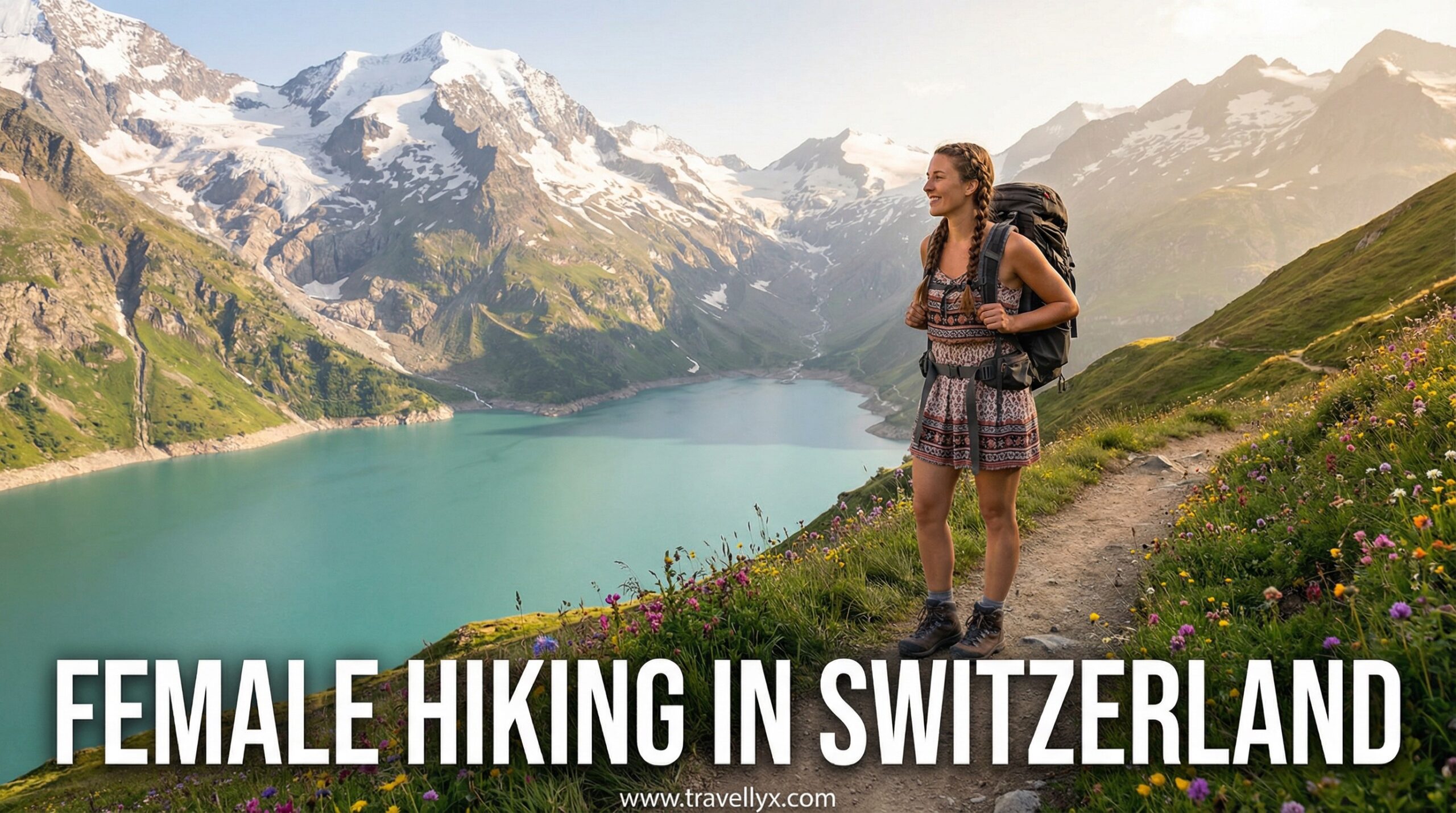
Solo Female Hiking in Switzerland: 7 Breathtaking Trails That Are Safe, Scenic, and accessible.
Are you dreaming of hiking through snow-capped peaks and emerald valleys but worried about doing it alone? You’re not alone in wondering if solo female hiking in Switzerland is safe, doable, and worth it. The good news is that Switzerland ranks as one of the safest countries in the world for solo female travelers, with well-marked trails, reliable public transport, and a culture that respects outdoor enthusiasts. In this complete guide, you’ll discover seven breathtaking trails that combine stunning alpine views with accessibility and safety, plus all the practical tips you need to make your solo Swiss hiking adventure a reality.
Why Switzerland is Perfect for Solo Female Hikers
Switzerland isn’t just beautiful. It’s practically designed for solo travelers. The country boasts an incredibly efficient public transport system, trails marked with precision, and a safety record that puts most countries to shame. You can hike in the morning, enjoy fondue in a mountain restaurant for lunch, and be back at your cozy accommodation by evening, all without needing a car or a hiking partner.
Why Switzerland is the Number One Choice for Solo Female Hiking
When you think about solo female hiking in Switzerland, safety naturally comes to mind first. Switzerland consistently ranks in the top five safest countries globally, with crime rates so low that locals often joke about it. But beyond the statistics, there’s a hiking culture here that makes solo adventurers feel genuinely welcome.
The Swiss take their trails seriously. Every path is marked with yellow diamond signs that are virtually impossible to miss. These signs show you exactly where you are, where you’re going, and how long it will take to get there. No guessing, no getting lost, no panic. It’s like having a friendly guide without actually needing one.
The public transport system deserves its own paragraph. The Swiss Federal Railways (SBB) runs like clockwork, connecting even the most remote mountain villages to major cities. You can literally plan your hike down to the minute, knowing that if you reach the trail end at 4:47 PM, there will be a train or bus waiting at 4:52 PM. This reliability means you never feel stranded, which is a huge confidence booster when hiking solo.
The Solo Female Advantage in Switzerland
Unlike some destinations where solo women face unwanted attention, Switzerland’s hiking culture is refreshingly respectful. You’ll encounter families, elderly couples, and other solo hikers who offer friendly nods rather than intrusive questions. The mountain huts and restaurants along trails are staffed by professionals who treat solo diners with the same warmth as large groups.
Essential Safety Preparation Before You Go
Preparation makes all the difference between a confident adventure and an anxious one. Here’s what you need to know before setting foot on a Swiss trail.
Understanding the Swiss Trail Marking System
The Swiss hiking trail system uses three color codes, and knowing them will instantly make you feel more confident. Yellow signs mark easy hiking trails suitable for regular walking shoes. These paths are well-maintained, wide, and rarely steep. White-red-white signs indicate mountain hiking trails that require proper hiking boots and sure-footedness. They might include some steep sections or exposed areas but nothing requiring climbing equipment. White-blue-white signs mark alpine routes that require mountaineering experience, and as a solo beginner, you’ll want to skip these entirely.
Every trail sign shows multiple pieces of information in a compact, easy-to-read format. You’ll see the destination name, the walking time to reach it, and often the altitude. The times listed are calculated for an average hiker carrying a light daypack, so if you’re reasonably fit, you’ll likely match or beat them.
Must-Download Apps for Solo Hiking
Technology is your friend in the Swiss Alps. The SBB Mobile app is absolutely essential. It shows real-time train, bus, and cable car schedules, allows you to buy tickets instantly, and even suggests the best connections for getting to trailheads. Download it before you leave home and familiarize yourself with its interface.
SwissMeteo is the official weather app, and in the mountains, weather can change rapidly. Check it every morning before heading out. Swiss weather forecasts are remarkably accurate, and if they say rain is coming at 2 PM, you can bet it will arrive at 2 PM.
The Schweiz Mobil app offers detailed trail maps that work offline. Download the regions you’ll be visiting while you have WiFi, and you’ll have turn-by-turn trail information even in areas without cell service.
Pro Safety Tip
Always take a screenshot of your planned route and the last train times back. Even if your phone battery dies, you’ll have this crucial information saved in your photos, which often remain accessible even when the phone is in power-saving mode.
What to Pack for a Safe Day Hike
Swiss weather can be unpredictable, especially at altitude. Even on a sunny summer day, temperatures can drop significantly as you gain elevation. Layer your clothing: a moisture-wicking base layer, an insulating mid-layer like a fleece, and a waterproof outer shell. You might start your hike in a t-shirt and finish it wearing all three layers.
Bring more water than you think you’ll need. While many trails have fountains with drinkable water, don’t count on them. A two-liter water bottle or hydration bladder is ideal for most day hikes. Pack high-energy snacks like nuts, dried fruit, and chocolate bars. Swiss chocolate is world-famous for a reason, and it provides quick energy when you need it.
Your phone should be fully charged before you start. Bring a portable power bank as backup. While many popular trails have good cell coverage, it’s not universal, and you don’t want to be caught with a dead phone if you need to call for help or check the weather.
Don’t forget sunscreen and sunglasses. At higher altitudes, UV radiation is stronger than you’d expect. Even on cloudy days, you can get surprisingly sunburned. A small first-aid kit with blister treatment, pain relievers, and bandages rounds out your essentials.
The Seven Best Trails for Solo Female Hiking in Switzerland
These trails were specifically chosen because they combine stunning scenery with excellent safety features. Each one is well-traveled, has good cell coverage, offers easy access to food and facilities, and can be reached entirely by public transport.
1. Männlichen to Kleine Scheidegg: The Classic Panorama Trail
Region: Bernese Oberland (Grindelwald area)
Distance: 4.5 kilometers
Duration: 1.5 to 2 hours
Difficulty: Easy
Elevation: Mostly downhill, starting at 2,343 meters
This trail is often called the most beautiful easy hike in Switzerland, and once you see it, you’ll understand why. The Männlichen cable car whisks you from Grindelwald up to the starting point, where you’re immediately greeted by jaw-dropping views of the Eiger, Mönch, and Jungfrau peaks, three of Switzerland’s most iconic mountains.
The path is wide, smooth, and predominantly downhill, making it perfect for your first alpine hike. You’ll never feel alone here because this trail is incredibly popular, meaning constant company without feeling crowded. Families with young children tackle this route easily, which tells you everything about its accessibility.
About halfway through, you’ll reach a scenic viewpoint where everyone stops for photos. The Eiger North Face dominates the view, and on clear days, the light creates perfect conditions for those Instagram-worthy shots you’ve been dreaming about.
When you reach Kleine Scheidegg, you’ll find multiple restaurants serving traditional Swiss food. Sit on a sunny terrace, order a plate of rösti, and watch the historic cog railway chug past on its way to Jungfraujoch. The trains back to Grindelwald or Lauterbrunnen run every half hour, making timing stress-free.
Why It’s Perfect for Solo Women: Constant foot traffic means you’re never truly alone, excellent cell coverage throughout, multiple mountain restaurants if you need a break, and the cable car eliminates any difficult climbing.
2. The Five Lakes Walk: Matterhorn Magic
Region: Zermatt
Distance: 9 kilometers (circular route)
Duration: 2.5 to 3 hours
Difficulty: Easy to moderate
Elevation: Starting at 2,288 meters
If you want to see the Matterhorn reflected in crystal-clear alpine lakes, this is your hike. The Rothorn cable car takes you up to Blauherd, where the trail begins. From there, you’ll walk past five pristine mountain lakes, each offering different perspectives of the famous pyramid-shaped peak.
The trail is well-marked and surprisingly gentle considering the spectacular scenery. You’ll encounter lots of other hikers, from serious trekkers to families with teenagers. Everyone stops at the Stellisee, the third lake, because it offers the most famous Matterhorn reflection shot. Arrive early morning for the calmest water and best light.
Small tea houses and refreshment stands dot the route. These aren’t fancy restaurants but rather charming mountain huts where you can buy hot chocolate, snacks, and even homemade cake. The owners are usually locals who’ve been running these establishments for decades and have seen thousands of solo hikers.
The beauty of this circular route is that you can shorten it if needed. After the first three lakes, there’s an option to take a cable car down from Sunnegga rather than completing the full loop. This flexibility makes it ideal for gauging your comfort level.
Why It’s Perfect for Solo Women: Impossible to get lost on this well-marked loop, constant stream of other hikers, multiple exit points if you need to cut the hike short, and Zermatt is car-free, making the entire experience peaceful and safe.
3. Mount Rigi Panorama Trail: The Queen of Mountains
Region: Central Switzerland (Lucerne area)
Distance: 7 kilometers
Duration: 2 hours
Difficulty: Easy
Elevation: Gentle slopes around 1,400 meters
Mount Rigi has been a tourist destination since the 1800s, which means the infrastructure here is exceptional. You can reach the starting point by taking a scenic boat ride across Lake Lucerne, followed by a historic cog railway. The journey to the trailhead is an experience in itself.
This trail offers something unique among alpine hikes: 360-degree panoramic views. You’ll see 13 different lakes and countless peaks, all while walking along gentle paths through alpine meadows filled with wildflowers in summer. The trail feels more like a high-altitude walk than a demanding hike.
The summit area has multiple hotels and restaurants, some dating back over a century. These establishments cater to tourists who come just for the views without hiking, which means you’ll find excellent facilities, clean bathrooms, and comfortable places to rest.
One unexpected advantage of Mount Rigi is that it’s less crowded than the more famous peaks, despite being equally beautiful. You’ll have space to enjoy the views without fighting for photo spots, yet you’ll still see enough people to feel safe hiking solo.
Why It’s Perfect for Solo Women: Extremely accessible via boat and train, very well-maintained trails, historical hotels provide ultimate safety backup, and the gentle terrain means you can focus on scenery rather than watching your footing.
Dealing with Solo Dining Anxiety
Many solo female travelers worry about eating alone in mountain restaurants. Here’s the truth: Swiss mountain culture is completely accustomed to solo diners. Bring a book or journal, choose a table with a view, and enjoy your meal. The staff won’t bat an eye, and you might even strike up conversations with neighboring tables. Some of the best travel friendships start over shared fondue at a mountain hut.
4. Seealpsee: The Instagram-Famous Cliff Restaurant Hike
Region: Appenzell
Distance: 6 kilometers (return)
Duration: 1.5 hours each way
Difficulty: Moderate
Elevation: 250 meters ascent
This hike leads to one of Switzerland’s most photographed spots: the Aescher cliff restaurant. Perched dramatically against a rock face, this restaurant looks like it was built by hobbits with excellent taste in real estate. The hike to reach it is steep in places but manageable for anyone with reasonable fitness.
You’ll start from the Wasserauen cable car station and immediately begin climbing through lush forests. The path is narrow in some sections but always well-maintained. About halfway up, the forest opens to reveal Seealpsee, a stunning turquoise lake surrounded by dramatic cliffs. Many hikers stop here for a swim in summer.
The final push to Aescher involves some steeper sections, but handrails are installed where needed. When you arrive at the restaurant, the view justifies every uphill step. Order the traditional Appenzeller cheese dishes and sit on the terrace that seems to hang in mid-air.
This trail sees heavy traffic during peak season, which means you’re never hiking alone. The popularity also ensures that the path is well-maintained and any safety issues are quickly addressed.
Why It’s Perfect for Solo Women: Extremely popular route with constant traffic, clear path with no navigation challenges, iconic photo opportunity motivates you through tough sections, and the restaurant provides a perfect rest stop and reward.
5. Lavaux Vineyard Terraces: The Lower-Altitude Alternative
Region: Lake Geneva area
Distance: 8 to 11 kilometers (customizable)
Duration: 3 to 4 hours
Difficulty: Easy to moderate
Elevation: 200 to 400 meters, rolling hills
Not every great hike needs to be in the high Alps. The Lavaux vineyard terraces offer a completely different Swiss hiking experience that’s perfect for shoulder season when higher trails are still snow-covered. This UNESCO World Heritage site features centuries-old stone terraces cascading down to Lake Geneva.
You’ll walk through working vineyards, passing small wine cellars where vignerons offer tastings. The path alternates between vineyard rows and charming medieval villages. Unlike mountain hikes, you’re never far from civilization here, which provides an extra layer of comfort for solo travelers.
The route is incredibly flexible. You can start and stop at any of several train stations along the lake, customizing the distance to your preference. Signs in both French and English mark the official vineyard trail, making navigation effortless.
Spring and fall are ideal times for this hike. Spring brings budding vines and mild temperatures, while fall offers harvest season atmosphere and stunning autumn colors. Summer can be hot, but the lake provides cooling breezes.
Why It’s Perfect for Solo Women: Lower elevation means no altitude concerns, villages and train stations every few kilometers, wineries and restaurants provide frequent rest opportunities, and cultural interest adds dimension beyond pure nature hiking.
6. Oeschinen Lake: The Turquoise Jewel
Region: Bernese Oberland (Kandersteg)
Distance: 8 kilometers (return to lake)
Duration: 1.5 hours up, 1 hour down
Difficulty: Moderate
Elevation: 350 meters ascent
Oeschinen Lake is one of those places that doesn’t look real in photos. The water is an impossible shade of turquoise, surrounded by towering peaks and fed by waterfalls cascading down cliff faces. Getting there requires a short but steady uphill walk from the gondola station.
The trail to the lake is wide and well-groomed, suitable for everything from trail runners to families pushing strollers. Yes, people actually push strollers up this trail, which tells you about its accessibility. The steady incline provides good exercise without being overly challenging.
Once you reach the lake, multiple trails branch off for those wanting more adventure. But the lake shore itself offers plenty to explore. You can rent rowboats, swim in the cold but refreshing water, or simply find a spot on the shore for a picnic. A mountain restaurant near the lake serves hearty Swiss meals.
The return gondola runs until early evening, but check the exact times before you go. This flexibility means you can spend as much or as little time at the lake as you want without rushing.
Why It’s Perfect for Solo Women: Single clearly-marked trail eliminates navigation stress, gondola reduces hiking distance, lake destination provides multiple activity options, and excellent facilities including clean bathrooms and restaurant.
7. Bachalpsee: The Alpine Lake Mirror
Region: Bernese Oberland (Grindelwald)
Distance: 6 kilometers (return)
Duration: 2 hours total
Difficulty: Easy
Elevation: Minimal, starting at 2,265 meters
This hike starts at First, reached by a spectacular gondola ride from Grindelwald. The journey up is an adventure itself, with views that keep getting better as you ascend. Once at First, you’ll find adventure activities like zip lines and mountain carts, but our focus is the tranquil walk to Bachalpsee.
The trail to the lake is almost flat, following a well-maintained path through alpine meadows. In early summer, these meadows explode with wildflowers, creating a carpet of colors against the snowy peaks. The walk takes about an hour each way at a leisurely pace.
Bachalpsee itself is small but perfectly formed, offering mirror-like reflections of the surrounding mountains on calm mornings. The best photos happen before 10 AM, when other hikers haven’t yet arrived and the wind is typically calm.
The First area has multiple restaurants and facilities, making this an excellent choice for a half-day excursion. You can combine the lake hike with lunch on a sunny terrace, watching paragliders launch from the mountain.
Why It’s Perfect for Solo Women: Nearly flat terrain despite high altitude, very busy area with lots of people, excellent facilities at both ends, and option to combine with other activities at First.
Saving Money as a Solo Traveler: The Swiss Travel Pass Strategy
Switzerland has a reputation for being expensive, and that reputation is earned. However, smart planning can significantly reduce costs, especially regarding transportation. The Swiss Travel Pass deserves serious consideration for any multi-day hiking trip.
This pass provides unlimited travel on trains, buses, and boats throughout Switzerland, plus free admission to many museums. More importantly for hikers, it offers 50 percent discounts on most mountain railways and cable cars. When a single cable car ticket can cost 50 francs or more, those discounts add up quickly.
Calculate your planned transportation costs before buying. If you’re spending four or more days exploring different regions, the pass almost always pays for itself. The added benefit is spontaneity. With an active pass, you can decide last-minute to take a different route or explore an additional area without worrying about ticket costs.
Solo Traveler Accommodation Tips
Solo travelers typically pay a premium for single rooms, but Switzerland has excellent options that minimize this cost. Mountain hostels and huts charge per person rather than per room, eliminating the single supplement. Many offer private rooms at reasonable rates, combining privacy with budget-friendliness.
Look for accommodations that include breakfast. Swiss breakfast spreads are generous, and you can often make sandwiches for trail snacks from the breakfast buffet, saving on lunch costs. Towns like Grindelwald, Zermatt, and Interlaken have good hostel options with social atmospheres where solo travelers can meet hiking partners if desired.
Joining Women’s Hiking Groups: Solo but Not Alone
If the idea of hiking completely solo feels daunting, consider starting with organized women’s hiking groups. Switzerland has several options that provide the security of group travel with the flexibility of joining independently.
Wild Women Expeditions offers women-only hiking tours throughout Switzerland, designed specifically for solo female travelers. These tours handle all logistics, provide experienced guides, and foster a supportive group environment. You get the Swiss hiking experience without needing to plan every detail yourself.
Alpenwild is another reputable company offering small-group walking holidays through the Swiss Alps. Their tours focus on cultural immersion alongside hiking, staying in charming mountain villages and sampling regional cuisine. The groups are small enough to feel personal but large enough to meet interesting fellow travelers.
Many local hiking clubs in Switzerland welcome visitors on their group hikes. The Swiss Alpine Club organizes regular outings, often welcoming non-members for a small fee. These provide excellent opportunities to hike with experienced locals who know the trails intimately and can share insider knowledge about the best routes and hidden gems.
For a comprehensive guide to planning your first solo European adventure, check out this helpful resource on planning your first solo trip to Europe.
Best Times for Solo Female Hiking in Switzerland
Timing your Swiss hiking adventure correctly makes a huge difference in experience and safety. The traditional hiking season runs from June through September, when most trails are snow-free and weather is most stable.
Summer Season: July and August
Peak summer brings the most reliable weather and longest daylight hours. Trails are fully accessible, wildflowers are blooming, and all facilities are open. The downside is crowds, especially on famous routes like Männlichen to Kleine Scheidegg. Accommodation prices also peak during these months.
However, crowds aren’t necessarily bad for solo female hikers. More people means more security and more opportunities to meet fellow travelers. The buzzing atmosphere at mountain restaurants and trail junctions can feel energizing rather than overwhelming.
Shoulder Seasons: June and September
These months offer sweet spots for solo hikers. June brings spring wildflowers and fewer tourists, though higher trails may still have snow patches. September delivers autumn colors, crisp air, and diminishing crowds as school holidays end.
Weather in shoulder seasons requires more attention. Check forecasts carefully and be prepared for sudden changes. The advantage is having trails more to yourself while still maintaining good safety conditions with reasonable numbers of other hikers around.
What About Winter Hiking?
Winter transforms Swiss trails into snowy wonderlands, but it’s not recommended for solo beginners. Many trails close completely, those that remain open require special equipment, and avalanche risk adds serious danger. Save winter hiking for when you’ve gained experience and can join guided groups.
Weather Reality Check
Even in summer, Swiss mountain weather can be unpredictable. Morning sunshine can turn to afternoon thunderstorms. Always check the forecast, start early, and be willing to turn back if conditions deteriorate. There’s no shame in cutting a hike short. The mountains will still be there tomorrow.
What to Do If Something Goes Wrong
Preparation and prevention are ideal, but knowing what to do in emergencies provides crucial peace of mind. Switzerland’s emergency response system is excellent, but you need to know how to access it.
Emergency Contact Numbers
The universal European emergency number is 112, which works throughout Switzerland and connects you to appropriate services. For mountain rescue specifically, call 1414. This connects directly to the Swiss Alpine Rescue service, staffed by professionals who handle mountain emergencies daily.
Save these numbers in your phone before starting any hike. Also save the number of your accommodation so you can call them if you’re running late or need assistance.
If You Get Lost
Getting lost on marked Swiss trails is rare, but it happens. If you realize you’re off-route, stop immediately. Don’t keep walking hoping to find your way. Check your phone’s GPS and the Schweiz Mobil app to determine your location.
If you have cell service, call your accommodation or a local tourist office. They can help guide you back to a known location. If you have no service, retrace your steps to the last trail marker you saw. Swiss trail markers are placed frequently, so you shouldn’t need to backtrack far.
Injury or Exhaustion
If you injure yourself or become too exhausted to continue safely, don’t push through. Find a safe, visible spot near the trail and call 1414 for mountain rescue. They’ll ask for your location, the nature of the problem, and whether you need immediate evacuation.
Swiss rescue services are professional and non-judgmental. They’d rather you call for help when you genuinely need it than attempt to continue and make the situation worse. Travel insurance should cover mountain rescue costs, but even without insurance, your safety comes first.
Cultural Considerations and Swiss Hiking Etiquette
Understanding local hiking culture helps you feel more comfortable and shows respect for Swiss outdoor traditions. These unwritten rules are simple but important.
Trail Etiquette
Hikers moving uphill have right of way. When you’re descending and meet someone climbing, step aside briefly to let them pass. This tradition exists because uphill hiking requires more effort and maintaining momentum matters.
Keep noise levels moderate. Swiss hiking culture values peace and natural sounds. Loud music or phone conversations disrupt others’ experiences. Save your phone calls for meal breaks away from others.
Pack out everything you pack in. Switzerland is immaculately clean, and littering is seriously frowned upon. Carry a small bag for trash and dispose of it properly in valley towns.
Interacting with Other Hikers
A simple “Grüezi” (hello in Swiss German) or “Bonjour” (in French regions) when passing other hikers is standard and friendly. You don’t need to stop for conversation, but acknowledging fellow trail users with a greeting and smile is expected.
At mountain restaurants, don’t be surprised if you’re asked to share a table during busy times. This is normal Swiss practice and often leads to interesting conversations. If you prefer solitude, choosing off-peak dining times helps.
Overcoming Solo Travel Fears: Real Talk
Let’s address the elephant in the room. Solo hiking anxiety is real, and pretending it doesn’t exist helps no one. Here are the most common fears and practical ways to manage them.
Fear: “What if I can’t finish the hike?”
Reality: Most Swiss hikes have multiple exit points. You can take a cable car down, catch a bus, or simply turn around. Nobody tracks whether you complete trails. Start with shorter hikes like Männlichen to Kleine Scheidegg to build confidence. Success isn’t about distance covered but about enjoying the experience.
Fear: “What if I get injured alone?”
Reality: Popular Swiss trails see hundreds of hikers daily during summer season. You’re rarely more than 30 minutes from another person. Cell coverage is good on most recommended trails. Stick to well-traveled routes until your confidence grows. The more you hike, the more you’ll realize how safe these trails actually are.
Fear: “What if other hikers judge me for being alone?”
Reality: Nobody cares. Solo hikers are completely normal in Switzerland. If anything, you’ll receive admiring comments from people who wish they had the courage to hike solo. The Swiss hiking culture is remarkably inclusive and non-judgmental.
Fear: “What if I’m not fit enough?”
Reality: The seven trails in this guide were specifically chosen because they’re accessible to regular fitness levels. They’re challenging enough to feel like achievements but not so difficult that you need special training. Start with the easiest options and work your way up. Everyone starts somewhere.
If you’re looking for more European hidden gems to explore after conquering Swiss trails, discover hidden gems in Barcelona that only locals know.
Frequently Asked Questions
Yes, Switzerland consistently ranks among the world’s safest countries, with extremely low crime rates and a strong culture of respect for solo travelers. The hiking infrastructure is excellent, with well-marked trails, reliable public transport, and emergency services. Thousands of women hike solo in Switzerland every year without incident. The main safety concerns are weather and terrain, not other people, and both can be managed with proper preparation.
No, the seven trails recommended in this guide are accessible to anyone with regular fitness levels. You should be comfortable walking for two to three hours with moderate elevation gain, but you don’t need technical mountaineering skills or previous alpine experience. If you can handle a long day of sightseeing on foot, you can handle these hikes.
Budget varies widely, but expect 150 to 250 Swiss Francs per day including accommodation, food, and transport. A Swiss Travel Pass costs around 250 Francs for three days but pays for itself quickly with free train travel and 50 percent discounts on cable cars. Hostels start at 40 Francs per night, while mid-range hotels cost 100 to 150 Francs. Mountain restaurant meals average 20 to 30 Francs.
July through September offers the most reliable weather and fully accessible trails. July and August bring peak crowds but also peak safety through numbers of other hikers. June and September offer shoulder season advantages with fewer people and lower prices, though you need to monitor weather more carefully. Avoid October through May unless you’re joining guided winter tours.
English is widely spoken in Swiss tourist areas, especially in places like Grindelwald, Zermatt, and Interlaken. Trail signs use universal symbols, and the SBB app works perfectly in English. Learning a few basic German or French phrases enhances your experience and shows respect, but language barriers won’t prevent you from hiking successfully.
Absolutely. Start with the easiest trails like Männlichen to Kleine Scheidegg or the Mount Rigi Panorama Trail. These offer spectacular scenery with minimal difficulty and excellent safety infrastructure. Cable cars eliminate the hardest climbing sections, and the trails are busy enough that you’ll never feel truly alone. Build confidence gradually by completing easier hikes before attempting more challenging ones.
Mountain hostels and budget hotels offer the best value for solo travelers, charging per person rather than per room. Many have single rooms available at reasonable supplements. Book accommodation in base villages like Grindelwald, Zermatt, or Kandersteg rather than higher-altitude locations to save money. Mountain huts are another option but fill quickly during peak season.
Swiss trails are among the best-marked in the world. Yellow diamond signs appear every few hundred meters, showing direction, destination, and estimated walking time. The Swiss take trail maintenance seriously, and getting lost on marked paths is extremely rare. Download the Schweiz Mobil app for offline maps as backup, but the physical trail markers are almost foolproof.
Your Swiss Hiking Adventure Starts Here
Solo female hiking in Switzerland isn’t just possible—it’s one of the most rewarding outdoor adventures you can experience. The combination of stunning alpine scenery, exceptional safety infrastructure, and welcoming hiking culture creates ideal conditions for women traveling independently.
The seven trails outlined in this guide offer varying difficulty levels and regions, ensuring you’ll find options that match your fitness level and interests. From the dramatic peaks of the Bernese Oberland to the vineyard terraces of Lake Geneva, each trail provides unique experiences while maintaining the safety and accessibility that solo travelers need.
Remember that every experienced hiker was once a nervous beginner standing at a trailhead wondering if they could do it. The answer is almost always yes. Start with one of the easier trails, follow the preparation guidelines, and trust in Switzerland’s world-class hiking infrastructure.
The mountains aren’t going anywhere, so there’s no pressure to rush. Take your time, enjoy the journey, and celebrate each trail you complete. Before you know it, solo hiking will feel natural, and you’ll be planning your next Swiss adventure before you’ve even finished your first.
Now it’s your turn to share: What’s your biggest concern or question about solo female hiking in Switzerland? Drop a comment below and let’s help each other plan amazing alpine adventures. And if you’ve already hiked solo in Switzerland, share your favorite trail—your experience might inspire another woman to take that first step onto a Swiss trail.