AirAsia X Set for 2026 Expansion With Focus on Emerging Cities and Europe–Central Asia Travel Corridor
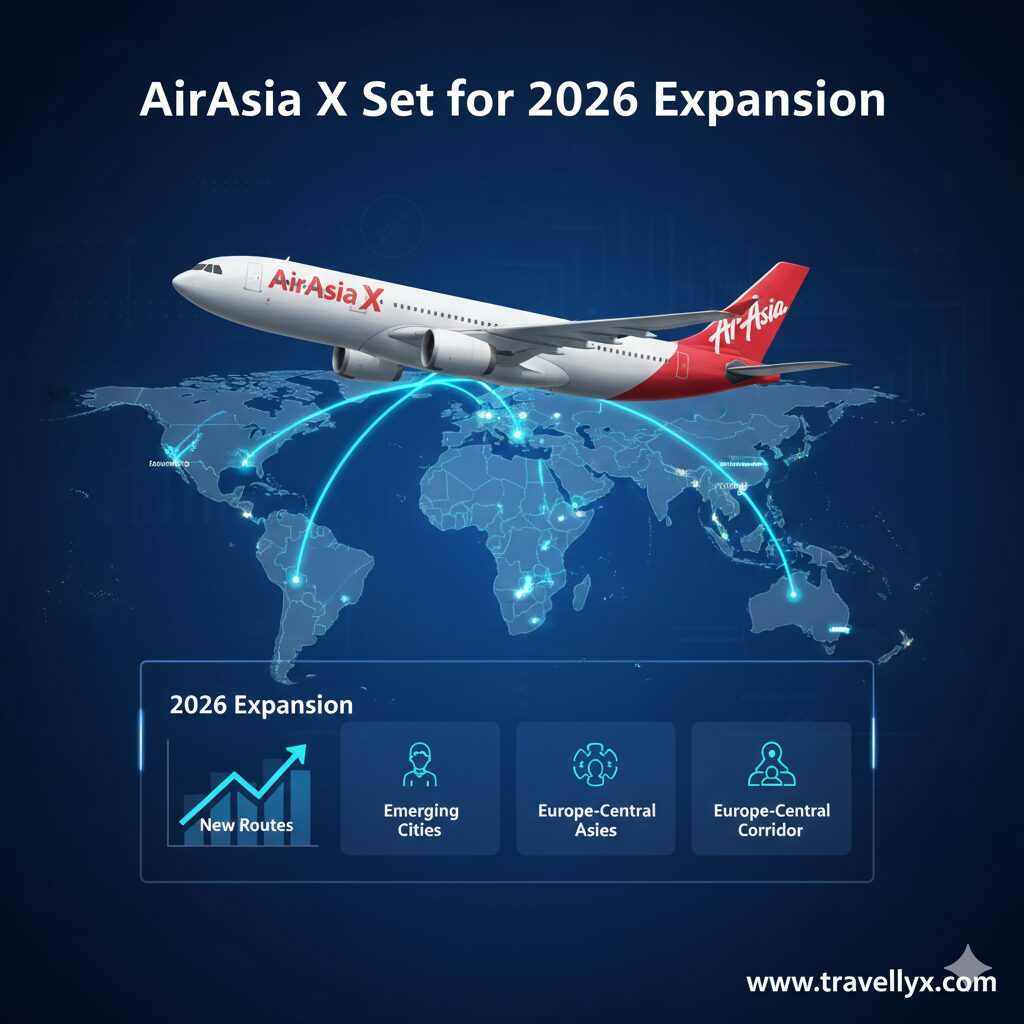
If you’ve been searching for the next big thing in affordable long-haul travel, especially to unique destinations, then you’ve landed in the right place. We’re here to confirm that the travel landscape is about to change in a major way! **AirAsia X is set for a massive 2026 expansion**, with a clear and exciting focus on opening up new, untapped markets. Specifically, the airline is creating a brand-new, budget-friendly travel corridor that links Asia with Europe and the key nations of Central Asia. If you dream of visiting places like Kazakhstan or Uzbekistan without breaking the bank, or are looking for a new, cost-effective way to reach cities in Europe, this news is what you’ve been waiting for, and we will walk you through every detail of this strategic plan.
🌍 The Grand Strategy: Why Emerging Cities?
AirAsia X (AAX), the long-haul arm of the popular low-cost AirAsia Group, isn’t simply adding a few new flights. They are putting into action a well-thought-out, post-restructuring plan to redefine their global network. This strategy is centered on two major ideas: going to **emerging cities** and building strong connections where other airlines are not yet dominant.
Tapping into Underserved Markets
For a long time, budget airlines focused mainly on popular tourist spots. However, the world of travel is changing. Travelers today are looking for more unique experiences in places that are less crowded and less expensive. This is exactly where the idea of focusing on “emerging cities” comes in. These cities often have high potential for tourism and business but are currently “underserved”—meaning they don’t have enough direct, affordable flights.
- Economic Growth: Many emerging cities, particularly in Central Asia, are seeing fast economic growth, leading to more business and leisure travelers.
- Cultural Richness: Destinations like Almaty and Tashkent offer incredibly rich historical and cultural experiences that appeal to the modern traveler.
- Lower Operating Costs: Flying to secondary cities often involves lower airport fees, which helps AirAsia X maintain its signature low fares.
The Importance of Long-Range, Narrow-Body Aircraft
A major key to this expansion is the arrival of new, more efficient aircraft, such as the **Airbus A321LR (Long Range) jets**, expected in the second half of 2026. These smaller, yet powerful, planes are perfect for medium-to-long haul routes (five to seven hours) that don’t require the massive capacity of a wide-body A330. This allows AAX to open routes to smaller, emerging cities that would not be profitable with a larger plane.
✈️ Forging the Europe–Central Asia Travel Corridor
The most exciting element of the 2026 expansion is the strategic creation of a brand-new travel corridor connecting Southeast Asia, Central Asia, and Europe. By establishing new hubs, AirAsia X is building a bridge for low-cost, multi-stop travel across continents.
Central Asia: The New Gateway to the West
AirAsia X has identified Central Asia, often called the heart of the ancient Silk Road, as a crucial market. Routes to cities like **Almaty, Kazakhstan** and **Tashkent, Uzbekistan**, have already proven successful, and the plan is to build on this foundation. Central Asia is now being considered a potential new hub, which means passengers could fly from, say, Kuala Lumpur to Almaty, and then continue their journey to Europe with a quick and seamless connection (a process known as ‘Fly-Thru’).
- **Current/Planned Central Asia Destinations:** Almaty (Kazakhstan) and Tashkent (Uzbekistan).
- **Strategic Goal:** Use Central Asia as a cost-effective staging point, allowing the airline to serve Europe more efficiently than a direct, ultra-long-haul flight.
The Re-Entry into Europe via Istanbul
AirAsia X has officially marked its return to Europe, and the city of **Istanbul, Turkey**, is the chosen gateway. Istanbul, a city that literally bridges two continents (Europe and Asia), is a key part of the new corridor.
While the first flights to Istanbul are a major milestone, the expansion doesn’t stop there. The airline is actively exploring new one-stop flights from Istanbul into Western Europe, potentially including major destinations like **London, Edinburgh, or Paris**. This move is expected to introduce incredibly competitive, budget-friendly options for Asian travelers wanting to explore Europe.
🔑 Leveraging New and Existing Hubs
The success of the 2026 expansion hinges on establishing strong, reliable hubs. A hub-and-spoke model is vital for a low-cost carrier aiming for global reach. By using key cities as central connection points, the airline can ensure that its planes are full, even on longer routes.
The Gulf Connection
In addition to Central Asia, the Middle East is also playing a significant role. AirAsia X has been exploring the possibility of using a Gulf nation—potentially **Bahrain**—as another connecting hub. A Middle Eastern hub would offer another excellent one-stop link for travelers flying between Asia and Europe or Turkiye.
Strengthening Regional Ties
Even as AirAsia X looks outward to Europe, it continues to strengthen its core in Asia. New routes to cities in Saudi Arabia, such as **Riyadh** and **Dammam**, are already being launched or considered. These routes not only serve a growing business and tourism market but also cater to the strong demand for religious travel, specifically for the Umrah pilgrimage.
This combined approach—using Kuala Lumpur, Central Asia, the Middle East, and Istanbul as strategic points—shows a sophisticated, step-by-step plan to create a vast, integrated network that connects the East and West at a low cost.
📈 What This Means for the Global Traveler
The **AirAsia X Set for 2026 Expansion** is more than just a corporate strategy; it is a significant win for the everyday traveler. What can you expect?
More Affordable Options
The most immediate and clear benefit is the increase in competition, which almost always results in lower fares. As AirAsia X introduces budget-friendly long-haul options, established full-service carriers will be forced to lower their prices, giving you more choices for less money.
New Destinations on Your Bucket List
The focus on emerging cities means that destinations that were once difficult and costly to reach are now becoming accessible. Places that were only dreams—the historical sites of Uzbekistan, the modern landscapes of Kazakhstan, or the cultural crossroads of Istanbul—will be a simple click away.
Enhanced Connectivity
The ‘Fly-Thru’ system, leveraging the new Central Asian and Gulf hubs, will make two-leg, intercontinental travel smoother. You won’t have to worry about re-checking bags or navigating complex visa issues for your layover, as the process is designed to be seamless across the AirAsia network.
In conclusion, the years leading up to and including 2026 will be a landmark period for AirAsia X. By strategically targeting **emerging cities** and building a robust **Europe–Central Asia Travel Corridor**, the airline is carving out a major space in the global long-haul market. This means more travel, more exploration, and more possibilities for your next adventure—all at a price that keeps your wallet happy. Keep an eye out for route announcements and introductory sales!